Imagine a classroom where every student learns at their own pace, focusing on subjects they find challenging and soaring through concepts they grasp quickly. This isn’t a futuristic dream anymore, especially in India. Artificial Intelligence (AI) is rapidly transforming education, ushering in an era of truly personalized learning. This shift is not just about technology; it’s about reshaping the fundamental way students interact with knowledge and how teachers guide their journeys.
The Indian education system, with its vast and diverse student population, stands to gain immensely from these innovations. AI in education India is no longer a niche concept but a powerful tool to address varying learning styles, bridge educational gaps, and prepare students for a rapidly evolving world. Let’s dive deep into how personalized learning is fundamentally changing Indian classrooms technology.
The Dawn of a New Era: AI in Indian Classrooms
The integration of AI into education marks a pivotal moment for India. It offers a promise of democratizing quality education, ensuring that geographical or socio-economic barriers do not hinder a student’s potential. Personalized learning, powered by AI, customizes the educational experience to each student’s unique needs, strengths, and weaknesses.
This customization significantly enhances content delivery and learning outcomes. It is making education more engaging and effective across diverse learning environments. The focus is squarely on the individual, a departure from the traditional one-size-fits-all model.
Personalized Learning: Tailoring Education to Every Student
At the heart of this transformation lies the ability of AI to adapt. It moves beyond static textbooks and generic lesson plans. Instead, it creates dynamic learning environments that respond to individual student progress in real-time. This level of responsiveness is unprecedented and highly impactful.
The goal is to ensure every student receives the exact support they need, precisely when they need it. This fosters a deeper understanding of concepts and builds confidence. It’s truly a game-changer for personalized learning India.
Adaptive Learning Systems: Your Personal Academic Compass
AI platforms meticulously analyze student data, including performance metrics, specific strengths, identified weaknesses, and individual learning paces. Based on this rich dataset, they craft customized learning pathways that are unique to each student’s requirements. This ensures a truly bespoke educational journey.
Students can work at their own optimal pace, revisiting complex topics as needed and accelerating through familiar material. This targeted approach makes education more effective and deeply personalized. It transforms the learning experience from passive reception to active engagement, as highlighted by various studies focusing on digital learning in 2025.
Intelligent Tutoring Systems: Virtual Guides for Every Step
These sophisticated, AI-driven systems offer individualized guidance and provide real-time feedback, much like a dedicated human tutor. They act as virtual mentors, supporting students throughout their entire learning journey. This continuous support is crucial for complex subjects.
Intelligent Tutoring Systems (ITS) can help overcome limitations related to access to private tutoring, especially in rural or underserved areas. They offer personalized assistance to a much broader range of learners, significantly improving both attention spans and overall interactivity. Such systems are vital for the future of education India.
Empowering Educators: AI as a Teacher’s Best Ally
While often perceived as a tool for students, AI offers immense support to teachers, reducing their workload and allowing them to focus on what they do best: teaching. This collaboration between human intelligence and artificial intelligence creates a more efficient and impactful classroom environment.
By automating mundane tasks, AI frees up valuable time for educators. This allows them to dedicate more energy to pedagogical strategies, individual student interaction, and professional development. It’s a significant boost for EdTech India.
- Automated Grading: AI can quickly and accurately grade assignments, quizzes, and even essays, providing consistent feedback.
- Customized Content Generation: Teachers can use AI to generate tailored teaching materials, worksheets, and lesson plans that resonate with specific student groups.
- Multi-level Classroom Management: AI assists in managing classrooms with diverse learning levels by suggesting or creating learning units adapted to different student competencies.
- Reduced Administrative Burden: About 77% of educators use AI to save up to 30% of their time on administrative tasks, enabling a focus on core teaching.
Boosting Engagement and Outcomes: The Student Experience
When learning is tailored to a student’s interests and pace, engagement naturally skyrockets. AI-enhanced personalized learning makes education a more dynamic, interactive, and rewarding experience, directly contributing to improved academic results.
A vast majority of educators, approximately 87%, firmly believe that AI-enhanced personalized learning significantly boosts student motivation, collaboration skills, and overall academic success. This positive impact is crucial for nurturing future generations.
Personalized AI tools also contribute significantly to inclusive education. They bridge accessibility gaps by providing real-time language translation for diverse linguistic backgrounds and accommodating various learning styles, from visual to auditory. This ensures no child is left behind due to learning differences.
Predictive Analytics: Nurturing Every Learner’s Journey
One of AI’s most powerful applications in education is its ability to look into the future, or at least predict it with remarkable accuracy. This foresight allows for proactive interventions, which can be life-changing for many students. It’s about being able to see potential issues before they become major problems.
AI can meticulously analyze vast amounts of student data to predict behaviors such as dropout risks or academic struggles. This capability enables timely and targeted intervention by educators and policymakers, helping to keep students on the right academic path. Such insights are invaluable for policy-making in AI in education India.
The Road Ahead: What’s New and Emerging in 2025 for EdTech India
The year 2025 is not just a distant future; it’s a near-term horizon for significant advancements in educational technology. AI-powered personalized learning is rapidly moving from being a futuristic concept to an active and integral part of classrooms across India. This transformation is gathering pace with new innovations.
Educational technology reports consistently highlight that schools adopting these groundbreaking technologies are witnessing more engaged learners, more efficient educators, and markedly improved academic outcomes. This positions India firmly on a path toward a digitally-enhanced, inclusive education system by 2025. It’s an exciting time for Indian classrooms technology.
New platforms are emerging that integrate gamification, virtual reality (VR), and augmented reality (AR) with AI-driven personalization. These technologies create immersive and interactive learning experiences, making complex subjects more approachable and enjoyable. The goal is to make learning an adventure.
For a deeper dive into these trends, explore the comprehensive insights on the future of education with AI in 2025. The emphasis is on scalable, accessible solutions that can cater to India’s vast educational landscape.
Navigating Challenges and Ethical Considerations in AI in Education India
While the potential of AI is widely recognized and incredibly promising, there are significant hurdles to overcome to ensure its equitable and ethical integration into Indian education. These challenges require concerted effort from all stakeholders. Addressing these issues is paramount for successful implementation.
Equitable access remains a critical concern. Currently, only about one in four Indian students benefits fully from AI-enabled education, highlighting a substantial disparity. Bridging this digital divide is essential for inclusive growth and development.
Furthermore, ensuring teachers are adequately trained to effectively integrate AI tools into their pedagogical practices is another pressing challenge. Without proper training, the full potential of these advanced tools cannot be realized in the classroom. This requires significant investment in professional development programs.
Studies also consistently stress the importance of ethical AI usage in education. This includes ensuring transparency in how AI algorithms make decisions, protecting student data privacy, and developing culturally sensitive content tailored to India’s incredibly diverse student population. These are complex but non-negotiable considerations.
Policymakers and technology developers are strongly urged to collaborate. Their joint efforts should focus on creating inclusive, AI-driven educational policies and innovative solutions that specifically address these existing gaps. This collaborative approach is vital for the sustained success of AI in education India. More insights into these ethical considerations can be found in a relevant journal publication.
| Pros of AI-Powered Personalized Learning in India | Cons and Challenges |
|---|---|
| Enhanced student engagement and motivation. | Significant gaps in equitable access to technology. |
| Customized learning pathways for individual needs. | Insufficient teacher training for AI tool integration. |
| Increased teacher efficiency by automating tasks. | Need for robust digital infrastructure across regions. |
| Improved academic outcomes and retention rates. | Ethical concerns regarding data privacy and bias. |
| Bridges accessibility gaps, promoting inclusive education. | Development of culturally sensitive and diverse content is ongoing. |
| Predictive analytics for early intervention and support. | High initial investment costs for schools and institutions. |
Expert Insights and Future Outlook for AI in Indian Classrooms
The journey of AI in Indian education is still in its early stages, yet its trajectory is clear and upward. Experts agree that the symbiotic relationship between human educators and artificial intelligence will define the learning landscapes of tomorrow. The discussions revolve around optimizing this synergy.
One key area of focus is the continuous development of AI tools that are not only powerful but also user-friendly and easily integrable into existing educational frameworks. This ensures broader adoption and effectiveness across diverse school settings. For a closer look at the research behind these systems, consult resources like this academic paper.
Furthermore, the emphasis is on creating a robust support system for teachers, equipping them with the skills and confidence to leverage AI effectively. This includes ongoing professional development and communities of practice where educators can share best practices. The goal is a truly empowered teaching force.
The long-term vision for EdTech India involves AI not just as a teaching aid, but as a foundational element of the educational ecosystem. This means AI assisting in curriculum design, policy formulation, and even school administration, creating a truly intelligent system. The transformation is holistic.
As we look towards the next decade, AI is poised to revolutionize how learning is delivered, assessed, and optimized, making quality education more accessible and effective for every Indian child. It is a powerful stride towards a brighter educational future. Learn more about the practical application of AI learning in classrooms.
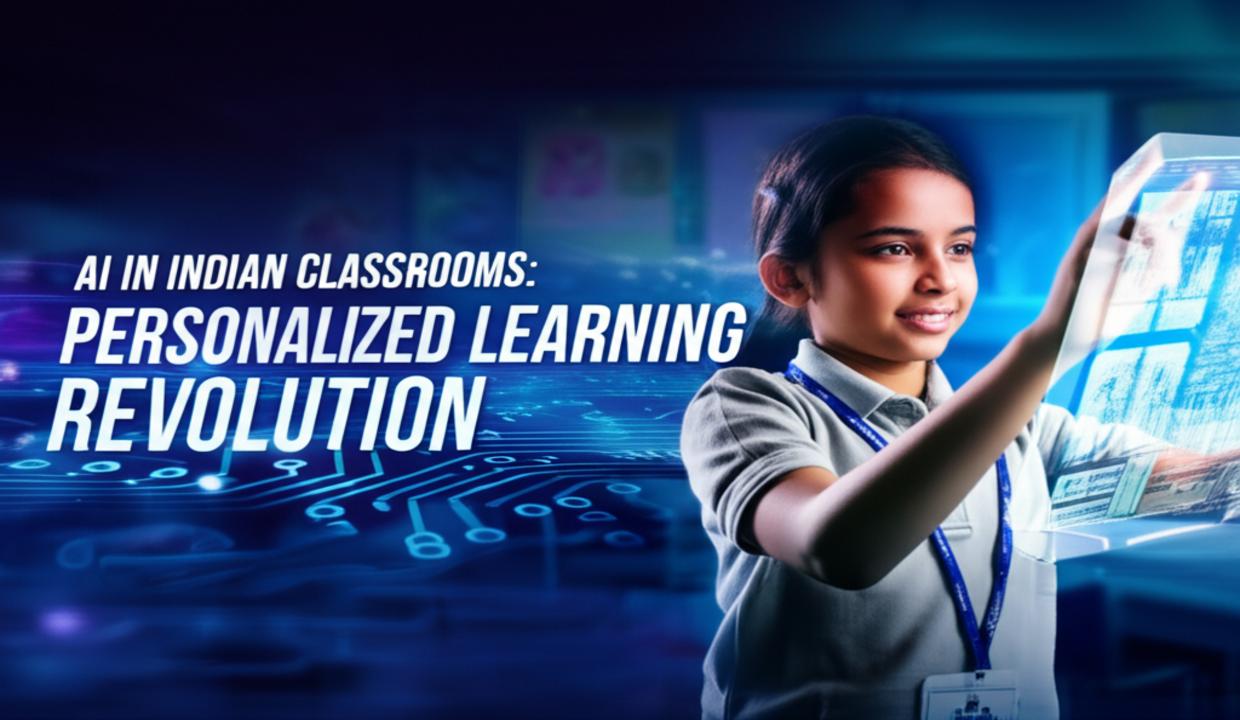
Watch the Transformation: AI in Indian Classrooms: Personalized Learning Revolution 2025
For those who wish to see AI in action, this video offers a fantastic visual overview. It brings to life the concepts discussed, providing real-world examples and invaluable testimonials from those on the front lines of this educational revolution.
This YouTube video review, titled “AI in Indian Classrooms: Personalized Learning Revolution 2025”, demonstrates practical applications of AI-driven adaptive learning platforms. It also shares teacher testimonials on AI’s impact and explores how these tools are supporting under-resourced schools. It highlights ongoing challenges like infrastructure and digital literacy training, providing a balanced perspective on #AIEducationIndia.
Frequently Asked Questions about AI in Indian Education
- How does AI personalize learning for Indian students?
AI platforms analyze student data, including performance and learning pace, to create customized learning pathways. They offer adaptive content and real-time feedback, ensuring each student receives tailored support suited to their individual needs and strengths. This adapts the learning experience uniquely. - What are the main benefits of AI for teachers in India?
AI significantly reduces teachers’ administrative workload by automating tasks like grading and content generation. This frees up time for more focused pedagogy and individual student attention, especially in multi-level classrooms. It streamlines classroom management and improves efficiency. - Is AI in education accessible to all Indian students?
Currently, equitable access remains a challenge, with only about one in four Indian students fully benefiting from AI-enabled education. Efforts are underway by policymakers and technology developers to bridge this digital divide and ensure broader access across the country, especially in rural areas. - What are the ethical considerations for using AI in Indian classrooms?
Ethical concerns include ensuring data privacy, transparency in AI algorithms, and the development of culturally sensitive educational content. There is a strong emphasis on responsible AI usage that respects India’s diverse student population and protects their personal information. - How will AI impact the future of education in India by 2025?
By 2025, AI is expected to significantly reshape Indian classrooms by enhancing personalized learning, boosting student engagement, and improving academic outcomes. It aims to create a more digitally-enhanced and inclusive education system, addressing learning gaps and preparing students better for the future.
Conclusion: Shaping the Future of Learning in India
The advent of AI in education is not just an incremental change but a profound transformation, particularly for India. Personalized learning, powered by intelligent algorithms, is democratizing access to quality education, tailoring it to the unique contours of every student’s mind. This empowers learners and significantly enhances the efficiency of educators.
While challenges such as equitable access and teacher training persist, the commitment to leveraging Indian classrooms technology for a brighter educational future is unwavering. As AI continues to evolve, it promises a future where education is not just about imparting knowledge, but about fostering a lifelong love for learning, uniquely suited for each individual. We invite you to explore more about these exciting developments and About Us on our journey.
Do you have thoughts on how AI is changing Indian classrooms? Share your comments below or Contact us with your insights! Your perspective helps enrich this crucial conversation.
Disclaimer: All images and videos are sourced from public platforms like Google and YouTube. If any content belongs to you and you want credit or removal, please inform us via our contact page.