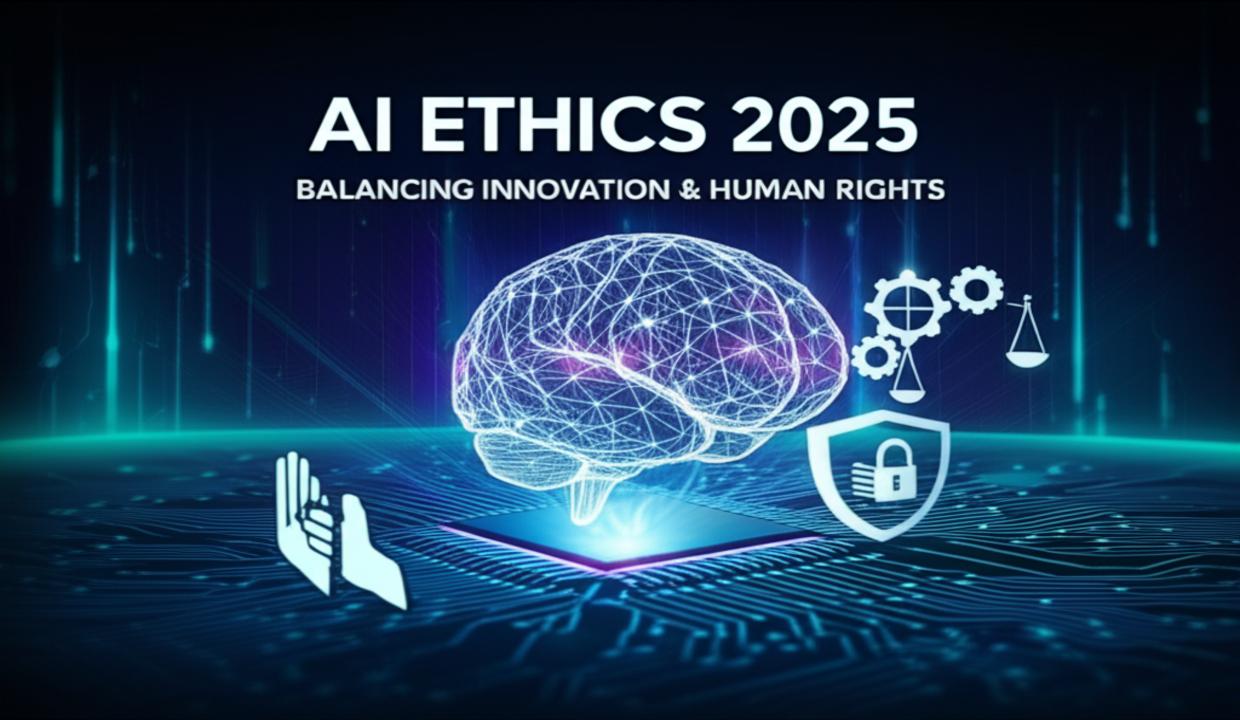
Welcome to the forefront of artificial intelligence discussions, where the year 2025 marks a pivotal moment. As AI systems become increasingly integrated into our daily lives, from personalized recommendations to critical decision-making tools, the ethical implications demand our urgent attention. This article delves into the intricate landscape of AI ethics 2025, exploring how we can skillfully balance groundbreaking AI innovation with the foundational principles of data privacy AI and fundamental human rights AI. Our goal is to illuminate the path toward truly responsible AI.
In the coming years, the conversation shifts from theoretical concerns to practical implementation. We are moving beyond simply identifying ethical dilemmas to actively building frameworks and technologies that embed ethics into AI’s very core. This involves a commitment to transparency, fairness, and robust accountability, ensuring that AI serves humanity’s best interests without compromise.
The Core Pillars of AI Ethics in 2025
At the heart of ethical AI in 2025 lie several undeniable principles: fairness, transparency, privacy, and accountability. These are not merely buzzwords; they are the bedrock upon which trust in artificial intelligence is built. Without them, the widespread adoption and societal acceptance of AI technologies become impossible.
One of the most persistent challenges remains algorithmic bias. This isn’t a flaw in the AI itself, but often a reflection of biased data used during its training. Flawed or unrepresentative datasets can lead to AI systems that discriminate in areas like hiring, loan approvals, or even legal judgments. Addressing this requires rigorous, ongoing bias audits and diverse data collection practices.
Another significant hurdle is the “black box” problem. Many advanced AI models, particularly deep learning networks, operate in ways that are difficult for humans to understand or explain. When an AI makes a critical decision, it’s essential to know why. Improving explainability, especially in sensitive domains such as healthcare and finance, is a top priority for responsible AI development.
Finally, accountability is paramount. When AI systems cause harm, whether through errors or unintended consequences, who is responsible? Establishing clear frameworks for liability and oversight is crucial to preventing harm and ensuring redress. This involves collaboration among developers, deployers, and policymakers.
Safeguarding Data and Ensuring Transparency in AI
The insatiable data requirements of advanced AI systems intensify concerns about privacy and security. As AI models grow larger and more complex, they often need vast amounts of information to learn effectively. However, this cannot come at the expense of individual privacy rights.
Innovative techniques are emerging to safeguard sensitive data while still enabling powerful AI training. Differential privacy, for instance, adds controlled “noise” to datasets to prevent the re-identification of individuals, protecting privacy even when data is shared. Federated learning allows AI models to be trained on decentralized datasets, keeping data on local devices rather than in a central cloud.
The concept of “privacy-by-design” is also gaining significant traction. This proactive approach mandates that privacy considerations are integrated into every stage of AI system development, from initial conception to deployment. It’s about building privacy in, not bolting it on as an afterthought.
Furthermore, compliance with evolving regulations is key. The EU AI Act, for example, establishes a risk-based approach, imposing stricter controls and human oversight for high-risk AI applications. These regulations aim to protect fundamental rights while fostering responsible AI innovation. You can learn more about building ethical and transparent systems at AI resolutions for 2025.
Transparency extends beyond data handling to content authenticity. With the rise of AI-generated content, mitigating misinformation becomes critical. Techniques like digital watermarking and embedded metadata, such as Microsoft’s Content Credentials, help users identify AI-generated or manipulated content. On-device deepfake detection also enhances trust by allowing verification without external cloud services.
User control over AI behavior is equally essential. People need to understand when they are interacting with an AI and have the ability to manage its functions. This level of transparency is vital for maintaining user trust in the age of generative AI and beyond.
Navigating the Regulatory Landscape for Responsible AI
In 2025, the development of robust institutional and regulatory frameworks is paramount to fostering responsible AI. It’s no longer enough for companies to develop AI; they must also demonstrate a commitment to ethical governance that goes beyond mere compliance.
Clear ethical guidelines are being established by governments, industry bodies, and international organizations. These guidelines provide a moral compass for AI developers and deployers, helping them navigate complex ethical dilemmas. Regulatory oversight is also expanding, with new bodies and mandates designed to monitor AI development and deployment.
The rise of multidisciplinary ethics review boards is a significant trend. These boards, sometimes called Institutional AI Ethical Review Boards, bring together experts from diverse fields—such as technology, law, philosophy, and social sciences—to evaluate AI projects. Their role is to ensure continuous ethical governance and to integrate AI ethics into the very fabric of organizational culture and policy.
A pragmatic approach to AI ethics involves applying these principles to real-world scenarios. It’s about striking a delicate balance: addressing the potential risks and negative impacts of AI without stifling the immense potential for innovation. This means fostering environments where ethical considerations are integrated from the design phase, rather than being an afterthought.
Human-AI Collaboration: Empowering Users and Society
The ethical development of AI also profoundly impacts how humans and AI systems collaborate. Designing AI for meaningful human control is a central tenet. This ensures that while AI can augment human capabilities, humans retain the ultimate decision-making authority, especially in critical applications. It’s about empowering users, not replacing them entirely.
Calibrating trust in AI is another delicate balance. Over-trust can lead to complacency and dangerous reliance, while under-trust can hinder AI’s beneficial adoption. Ethical AI systems are designed to communicate their uncertainties, explain their reasoning, and be transparent about their limitations, fostering an appropriate level of trust.
Broader societal concerns, such as job displacement and economic impacts, are also key areas of focus for AI ethics 2025. As AI automates tasks, it will inevitably transform workforces. Ethical AI development considers these shifts, advocating for retraining programs, new economic models, and policies that support individuals through these transitions.
Prioritizing human values over mere efficiency is a defining characteristic of responsible AI. This means designing systems that respect human autonomy, uphold human rights, and ultimately enhance human lives. AI should serve humanity, not the other way around. Insights into these ethical concerns are regularly discussed at AI Ethical Concerns.
Sector-Specific Ethical Considerations
While general ethical principles apply to all AI, certain sectors present unique challenges and requirements. Understanding these nuances is crucial for developing truly responsible AI applications.
Healthcare
In healthcare, AI systems deal with highly sensitive personal health data, making data privacy AI concerns paramount. Ethical AI in this sector must prioritize patient confidentiality above all else. Furthermore, promoting equity requires ensuring that AI models are trained on diverse datasets, preventing bias that could lead to disparate health outcomes for different demographic groups. Explainable decision support is also vital; clinicians need to understand how an AI arrived at a diagnosis or treatment recommendation, especially given the life-critical implications.
Education
The adoption of AI in education brings its own set of ethical considerations. Frameworks focus on learner autonomy, ensuring AI tools support rather than dictate learning paths. Fairness in AI-assisted teaching, grading, and admissions processes is critical to prevent bias and ensure equitable access to opportunities. Transparency about how AI is used, how it evaluates students, and how their data is handled builds trust among students, parents, and educators. You can explore the future of AI in higher education at Ethics is the Edge.
AI-Generated Content and Legal Risks
The burgeoning field of AI-generated content, from text to imagery and video, introduces novel legal and ethical dilemmas. Beyond authenticity and misinformation, there are significant questions around copyright, intellectual property, and defamation. Who owns content generated by AI? Who is liable if AI creates defamatory or harmful content? Legal frameworks are rapidly evolving to address these complex issues, emphasizing the need for clear provenance and accountability in AI-generated output. Navigating these risks is a key aspect of AI ethics 2025. Dive deeper into these challenges via AI ethics 2025 navigating legal risks.
Benefits and Challenges of Ethical AI Implementation
| Benefits | Challenges |
|---|---|
| Enhances public trust and adoption of AI technologies. | Requires significant investment in data governance and auditing. |
| Reduces legal and reputational risks for organizations. | Slower development cycles due to rigorous ethical reviews. |
| Fosters innovation that is truly human-centric. | Defining universal ethical standards across cultures. |
| Improves fairness and equity in decision-making. | Balancing innovation speed with ethical diligence. |
| Ensures compliance with evolving global regulations. | Scarcity of experts in both AI and ethics. |
Looking Ahead: The Collaborative Path to Responsible AI
Achieving truly ethical AI in 2025 is not a task for a single entity or discipline. It demands unprecedented collaboration among developers, businesses, policymakers, and society at large. This collective effort is essential to ensure that AI enhances human lives responsibly, without compromising our fundamental rights or eroding public trust. It’s about building a future where AI innovation serves humanity’s highest ideals, rather than its lowest common denominators.
The journey towards responsible AI is ongoing, requiring continuous adaptation, learning, and open dialogue. By prioritizing ethics from the outset, we can unlock AI’s full potential as a force for good, shaping a future where technology empowers and uplifts everyone. The implementation of AI ethics is a journey you can learn more about by reading Ethics in AI implementation.
Frequently Asked Questions
- What does AI ethics mean in 2025?
In 2025, AI ethics means balancing rapid AI innovation with strong protections for data privacy AI and human rights AI. It focuses on creating AI systems that are fair, transparent, accountable, and designed with human well-being at their core. This involves addressing issues like algorithmic bias and the “black box” problem proactively. - How is data privacy evolving with AI in 2025?
Data privacy AI in 2025 is evolving through advanced techniques like differential privacy and federated learning, which allow AI to learn from data without compromising individual confidentiality. There’s also a stronger emphasis on privacy-by-design architectures and compliance with comprehensive regulations such as the EU AI Act. - Why is transparency important for AI-generated content?
Transparency for AI-generated content is crucial to combat misinformation and build trust. In 2025, techniques like digital watermarking, embedded metadata (e.g., Microsoft’s Content Credentials), and on-device deepfake detection are becoming standard. This helps users differentiate between human-created and AI-created content, maintaining authenticity. - What role do regulatory bodies play in AI ethics in 2025?
Regulatory bodies in 2025 play a vital role in establishing clear ethical guidelines and providing oversight for AI development. They enforce compliance with new laws, like the EU AI Act, and encourage the formation of multidisciplinary ethics review boards. Their goal is to ensure responsible AI growth without stifling beneficial innovation. - How does AI ethics address human rights?
Human rights AI focuses on ensuring AI systems respect fundamental human values such as fairness, autonomy, and non-discrimination. It addresses concerns like algorithmic bias, ensures human oversight in critical decisions, and considers broader societal impacts like job displacement. The aim is to design AI that empowers people while safeguarding their dignity.
Watch More in This Video
Disclaimer: All images and videos are sourced from public platforms like Google and YouTube. If any content belongs to you and you want credit or removal, please inform us via our contact page.
For more insights into cutting-edge AI discussions, check out our About Us section.
#AIEthics #Innovation #Privacy #HumanRights #ResponsibleAI