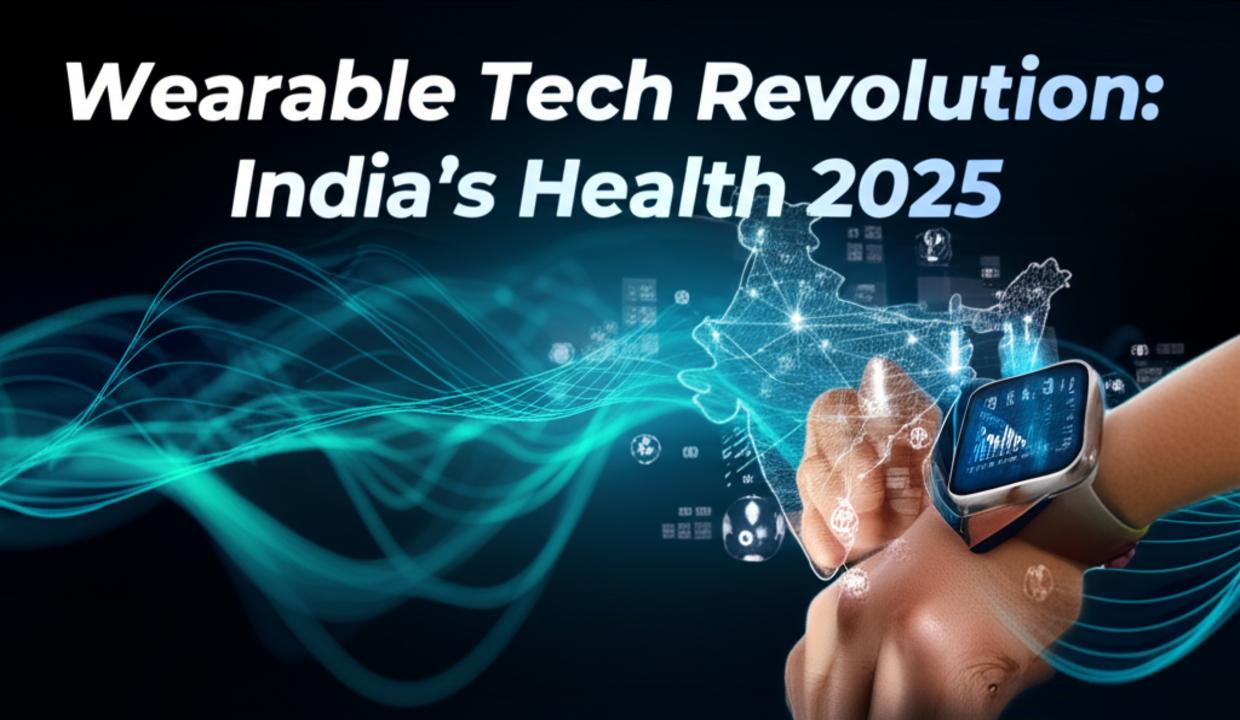
Welcome to the forefront of medical innovation! In a nation as diverse and expansive as India, access to quality healthcare has always been a significant challenge. However, a silent revolution is underway, powered by tiny devices that fit on our wrists, skin, or even within our clothing. This year, wearable technology India is not just a trend; it’s fundamentally reshaping how healthcare is delivered, making it more personal, proactive, and accessible than ever before.
From bustling metropolitan hospitals to remote village clinics, healthcare technology India is experiencing an unprecedented transformation. These smart gadgets, once mere fitness trackers, have evolved into sophisticated medical instruments. They offer a glimpse into the future of healthcare India, promising a system where wellness is monitored continuously, diseases are caught early, and care is tailored to each individual. Let’s explore how these devices are leading the charge in 2025.
Main Highlights: How Wearable Technology Is Changing Healthcare in India This Year
The impact of wearable technology India on healthcare in 2025 is profound and multifaceted. It’s moving us towards a healthcare model that is less about reacting to illness and more about preventing it. This shift is particularly crucial for a country like India, which faces unique health challenges and a vast population spread across varied geographies.
At its core, this transformation is driven by several key innovations. These include advanced sensors, artificial intelligence (AI), and seamless integration with telehealth platforms. Together, they are creating a powerful synergy that benefits patients, doctors, and the entire healthcare ecosystem.
- Continuous Remote Monitoring: Devices constantly track vital signs, enabling proactive health management.
- Personalized and Preventive Care: AI-powered insights lead to tailored health plans and early risk alerts.
- Enhanced Telehealth Integration: Seamless data flow improves accessibility, especially for rural and elderly populations.
- Specific Use Cases: Revolutionizing management of conditions like diabetes, cardiac issues, and sleep disorders.
- Market Growth: A rapidly expanding sector driven by demand for digital health and technological advancements.
The Rise of Continuous Remote Monitoring in Health Tech India
One of the most significant contributions of wearable technology India is its ability to facilitate continuous remote monitoring. Imagine a world where your heart rate, blood oxygen levels, and even glucose levels are tracked in real-time, without the need for constant hospital visits. This is precisely what advanced wearable devices offer today.
Smartwatches, sophisticated skin patches, and continuous glucose monitors (CGMs) are at the forefront of this revolution. These devices meticulously collect vital health data, transmitting it directly to healthcare providers. This constant stream of information allows doctors to monitor patient health remotely, identify potential issues early, and intervene before they become critical. It’s a game-changer for preventative care and chronic disease management.
This capability is particularly transformative in India, where geographic barriers often limit access to specialized medical care. Remote monitoring bridges this gap, bringing quality healthcare directly to people’s homes, regardless of their location. It reduces the burden on overstretched healthcare facilities and empowers individuals to take a more active role in managing their own health.
Personalized and Preventive Healthcare: The AI-Wearable Synergy
The true power of wearables healthcare emerges when integrated with artificial intelligence. Beyond mere data collection, AI transforms raw numbers into actionable insights. This synergy allows for the design of truly personalized treatment and preventive care plans, making healthcare far more effective and patient-centric.
These smart devices do more than just monitor; they learn from your health patterns. They can provide timely alerts about potential health risks even before symptoms appear. This proactive approach is invaluable for managing chronic conditions such as diabetes, heart disease, and sleep disorders. For instance, a wearable might detect subtle changes in heart rhythm indicating an impending issue, prompting early medical consultation.
For individuals, this means having a personal health guardian constantly looking out for their well-being. For healthcare providers, it offers a deeper, more comprehensive understanding of a patient’s health trajectory, enabling more precise and effective interventions. It’s a fundamental shift from a reactive “sick care” model to a proactive “well-being” model.
Enhanced Telehealth Integration with Wearables Healthcare
The integration of wearable technology India with telehealth services is dramatically improving healthcare accessibility. This synergy allows for the seamless transmission of patients’ real-time health data directly to their doctors, even if they are miles apart. This capability is especially beneficial for vast and diverse regions like India.
Telehealth platforms, empowered by wearable data, enable remote consultations that are far more informed and effective. Doctors can review continuous data streams from a patient’s smartwatch or health patch during a video call, leading to more accurate diagnoses and treatment plans. This is a boon for individuals in rural or underserved areas who previously faced significant hurdles in accessing medical expertise.
Furthermore, elderly patients requiring regular monitoring can benefit immensely. Their vital signs can be tracked from the comfort of their homes, reducing the need for stressful and frequent hospital visits. This not only enhances convenience but also improves the quality of life for many, reinforcing the idea of accessible and patient-centric care. Discover more about this integration by visiting this link: AI wearables and telehealth transformation by 2025.
What’s New in 2025? The Latest Technological Evolution
The year 2025 marks a significant leap in wearable technology India. These devices have moved far beyond their initial role as simple fitness trackers. Today, they are sophisticated diagnostic tools, early warning systems, and providers of personalized health recommendations, all wrapped into compact, user-friendly packages.
The latest wearables are equipped with increasingly advanced sensors capable of detecting a wider range of physiological parameters with greater accuracy. This includes multi-spectral sensors for deeper tissue analysis, enhanced ECG capabilities, and more reliable continuous glucose monitoring. Miniaturization has made these powerful tools more discreet and comfortable for daily wear.
Crucially, AI-powered analytics are at the heart of this evolution. They no longer just present data; they interpret it, identify patterns, and predict potential health issues. This greatly enhances the value of collected health data, directly shaping medical decisions and improving patient outcomes by enabling timely, data-driven interventions.
Specific Use Cases Revolutionizing Healthcare Technology India
The practical applications of wearable technology India across various medical fields are truly transformative. These devices are providing specific, measurable benefits in managing chronic conditions and improving overall health outcomes.
- Diabetes Management: Continuous glucose monitors (CGMs) provide real-time glucose measurements and alerts. This allows individuals with diabetes and their doctors to prevent dangerous fluctuations, leading to better blood sugar control and reduced complications.
- Cardiac Care: ECG-enabled smartwatches are becoming invaluable tools for early detection of irregular heart rhythms, such as atrial fibrillation. Timely detection significantly reduces the risk of strokes and other cardiac events.
- Post-Surgery Recovery & Rehabilitation: Wearable biometric sensors meticulously track recovery progress from surgery remotely. This reduces hospital readmissions by ensuring patients adhere to recovery protocols and allowing medical teams to monitor their healing journey outside the hospital environment.
- Sleep Monitoring: Advanced devices can accurately detect sleep apnea and other sleep disorders. By identifying these issues early, wearables contribute to improved overall health, as quality sleep is fundamental to well-being.
- Mental Wellness: Some wearables even track stress levels and offer guided breathing or mindfulness exercises, contributing to holistic mental health support.
Challenges and Opportunities for Wearables Healthcare
While the promise of wearable technology India is immense, its widespread adoption and effectiveness also come with certain challenges. Addressing these challenges presents significant opportunities for innovation and growth in the sector.
One primary concern is user comfort and the consistency of usage. For devices to be truly impactful, people need to wear them continuously. This has prompted innovations towards more comfortable, less intrusive designs, including sleek patches or even smart clothing. The future might see more implantable devices, designed for maximum adherence without user effort.
Another critical area is the security of sensitive health data. As more personal health information is collected and transmitted, robust security measures are paramount. Innovations like blockchain technology are being explored to enhance data privacy and integrity, ensuring secure exchange of information between patients and providers. This builds trust and encourages wider adoption, as highlighted in insights from the future of healthcare industry.
The Expanding Market Growth of Health Tech India
The healthcare technology India market, particularly in wearables, is experiencing rapid expansion. This growth is fueled by a confluence of factors: increasing consumer demand for digital health management tools, advancements in sensor technology, significant miniaturization of components, and the integration of powerful AI capabilities.
Globally, the healthcare wearables market was valued at an impressive $33.85 billion in 2023. Projections indicate a phenomenal surge to over $250 billion by 2030. India is mirroring these global trends, with a burgeoning middle class and a tech-savvy population eager to embrace digital solutions for health and wellness. This growth signifies a strong shift towards consumer-driven health management.
This escalating market creates vast opportunities for both domestic and international players. Startups and established companies are investing heavily in research and development to bring more sophisticated and user-friendly wearable health devices to the Indian market. The potential for impact on public health and economic growth is substantial, making it an exciting space to watch. More insights into smart wearables for 2025 can be found here: Smart Wearables in 2025.
Pros and Cons of Wearable Technology in Indian Healthcare
| Pros | Cons |
|---|---|
| Enables continuous remote patient monitoring, improving early detection. | Initial cost of devices can be a barrier for some segments of the population. |
| Facilitates personalized and preventive healthcare through AI-driven insights. | Ensuring data privacy and security of sensitive health information is critical. |
| Enhances accessibility to healthcare, especially in rural and underserved areas via telehealth. | User adherence and continuous wearing of devices can be a challenge for some. |
| Empowers individuals to take a proactive role in managing their own health. | Need for robust digital infrastructure and internet connectivity in all areas. |
| Reduces hospital visits and re-admissions, easing burden on healthcare system. | Regulatory frameworks need to evolve to keep pace with rapid technological advancements. |
| Provides valuable data for medical research and public health initiatives. | Potential for information overload for both patients and healthcare providers. |
Watch More in This Video
A recent video from 2025 explores how AI-driven wearable devices integrated with telehealth are fundamentally transforming patient care in India. It highlights their role in enabling real-time monitoring, personalized alerts, and remote consultations, significantly enhancing healthcare access, especially in rural areas. This technological shift is moving India’s healthcare ecosystem from reactive to preventive, making it more accessible, affordable, and patient-centric.
FAQ
- How is wearable technology making healthcare more accessible in India?
Wearable technology, particularly through its integration with telehealth, allows for remote monitoring of patients. This means individuals in rural or remote areas can access medical consultation and continuous health tracking without physically traveling to clinics, greatly improving accessibility for underserved populations and the elderly. - What specific health conditions are being managed by wearables in India?
Wearables are significantly impacting the management of several conditions. These include diabetes, through continuous glucose monitoring; cardiac issues, with ECG-enabled smartwatches detecting irregular heart rhythms; and sleep disorders, by identifying sleep apnea. They also aid in post-surgery recovery and rehabilitation. - Are there privacy concerns with health data collected by wearables?
Yes, data privacy is a significant concern. However, continuous innovation, including the use of technologies like blockchain, is enhancing the security and integrity of sensitive health data exchanged between patients and providers. Robust encryption and adherence to data protection regulations are paramount to building trust. - What role does AI play in wearable healthcare in India?
AI is crucial for transforming raw data from wearables into actionable insights. It helps create personalized treatment and preventive care plans, identifies potential health risks before symptoms appear, and makes remote monitoring more intelligent and predictive, enabling proactive healthcare interventions. - How is the market for healthcare wearables growing in India?
The healthcare wearables market in India is expanding rapidly, mirroring global trends. This growth is driven by increasing consumer awareness, technological advancements in sensors and AI, and a growing demand for digital health management tools, indicating a bright future for health tech adoption. Read more on healthcare tech trends: Healthcare Tech Trends. - Will wearable technology replace traditional doctor visits entirely?
No, wearable technology is not intended to replace traditional doctor visits but rather to augment them. It provides doctors with a continuous stream of valuable patient data, enabling more informed diagnoses and proactive interventions. It enhances the doctor-patient relationship by providing a more complete picture of health, making in-person consultations more efficient and focused.
Conclusion
The landscape of healthcare in India is experiencing a profound and positive transformation, largely driven by the advancements in wearable technology India. In 2025, these smart devices are empowering individuals, revolutionizing remote monitoring, and paving the way for truly personalized and preventive care. The integration of AI and telehealth with wearables is making healthcare more accessible, especially for those in remote areas, and is fundamentally reshaping how we approach health and wellness across the nation.
As the market continues to expand and technology evolves, we can anticipate even more sophisticated and integrated solutions. The future of healthcare in India looks increasingly digital, proactive, and patient-centric, thanks to the continuous innovation in health tech. This shift towards a preventative model holds immense promise for improving the quality of life for millions. We encourage you to learn more here about how medical journals are tracking these advancements. Discover more about us on our About Us page or Contact us for any queries. #HealthTechIndia #WearableTechRevolution #FutureOfHealthcare
Disclaimer: All images and videos are sourced from public platforms like Google and YouTube. If any content belongs to you and you want credit or removal, please inform us via our contact page.