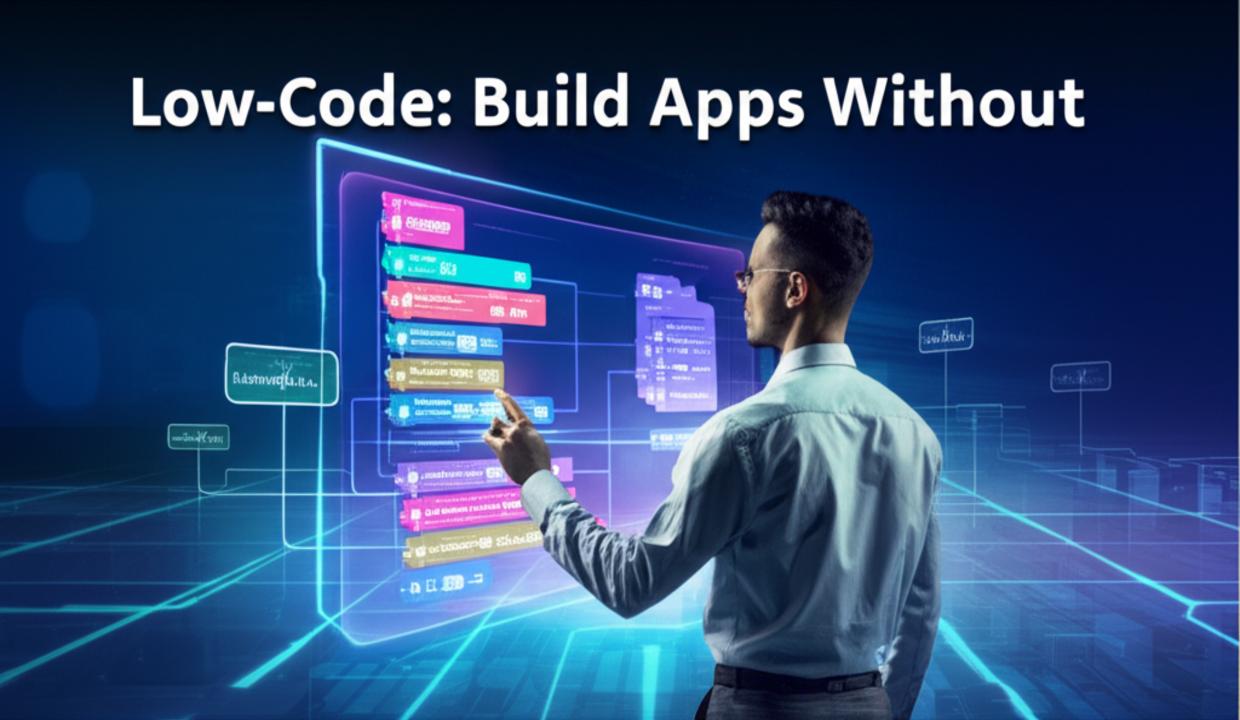
Have you ever had a brilliant idea for an app or a digital solution but felt stumped because you don’t know how to code? You’re not alone! For years, creating software has been largely the domain of professional programmers, leaving countless innovative ideas on the whiteboard. But imagine a world where your business insights or unique problem-solving skills are all you need to bring your digital visions to life. That world is here, thanks to the revolutionary impact of low-code development platforms.
These powerful tools are fundamentally changing the game, democratizing software creation and empowering millions of non-programmers to become active participants in the digital transformation. This article will explore exactly how low-code development platforms are breaking down traditional barriers, enabling anyone with a good idea to build functional, robust applications, and why this shift is more critical than ever for innovation and efficiency. Get ready to discover how you can master app development without coding and become a true citizen developer!
Main Highlights: How Low-Code Development Platforms Are Empowering Non-Programmers
The core promise of low-code is simple yet profound: to make application creation accessible to everyone. By providing intuitive, visual interfaces with drag-and-drop features, these platforms drastically reduce the need for extensive coding expertise. This empowers a new generation of creators, often referred to as citizen developers, to take the reins of digital innovation.
Here are the key ways low-code platforms are making a significant difference for individuals who don’t have a programming background:
- Visual Development Environment: At the heart of low-code is a graphical, drag-and-drop interface. Users create applications through pre-built templates, widgets, and reusable modules instead of writing extensive code lines. This immediately lowers the technical barrier, inviting non-programmers to participate directly in app creation.
- Iterative and Agile Development: Non-technical users can rapidly prototype, test, and refine applications. This agile approach ensures that solutions closely align with evolving business objectives and customer demands, enabling faster time-to-market for adaptive digital tools. You can explore a comprehensive guide on low-code development to understand its methodologies better. Learn more about low-code development principles here.
- Collaboration and Inclusion: By involving citizen developers who possess deep understanding of business processes, low-code platforms foster cross-functional collaboration. This improves alignment and innovation between technical teams and business stakeholders, ensuring solutions genuinely meet user needs.
- Customization and Extensibility: While primarily visual, these platforms offer surprising depth. They allow for custom coding where needed, giving non-programmers the freedom to develop sophisticated applications. This also means professional developers can still step in for advanced features, creating a powerful hybrid development model.
- Integration and Automation: Low-code tools come equipped with pre-built connectors to various databases, cloud services, and third-party APIs. This empowers non-coders to create integrated workflows and automate complex processes without needing intricate backend programming knowledge.
- Cost and Efficiency Benefits: Organizations significantly reduce reliance on specialized IT resources and external developers. This directly translates to cutting costs and accelerating development cycles, making digital transformation more accessible and affordable.
The Visual Revolution: Making App Development Intuitive
Imagine trying to build a house without seeing the blueprint or being able to drag and drop rooms into place. Traditional coding often feels like that to a non-programmer. Low-code platforms completely flip this script. They introduce a visual development environment that feels more like designing a presentation or arranging elements on a canvas.
With features like drag-and-drop components, pre-built templates, and intuitive graphical interfaces, users can literally see their application taking shape in real-time. This eliminates the steep learning curve associated with syntax and complex programming languages, making app development without coding a tangible reality. It’s about empowering creativity over rote memorization of code.
This visual approach extends beyond just the user interface. Workflows, business logic, and data models are often represented graphically, allowing non-programmers to understand and manipulate complex processes with ease. This design philosophy fosters a sense of immediate feedback and experimentation, crucial for rapid iteration and aligning the application precisely with business needs. For instance, platforms like Microsoft Power Apps are prime examples of tools offering this level of visual abstraction, enabling non-technical users to build robust applications quickly. Explore Microsoft’s low-code platform offerings.
Beyond Drag-and-Drop: The Core Technologies of Low-Code
While the front-end experience of low-code platforms is remarkably user-friendly, there’s sophisticated technology working behind the scenes to make it all possible. These platforms provide a robust architectural foundation that handles many of the complexities traditionally managed by expert developers. They offer built-in compilers, runtime engines, and often cloud-native infrastructure, abstracting away the intricacies of deployment, scalability, and security.
Key technological components include model-driven development, where applications are built by defining data models and business logic graphically. These models are then automatically translated into deployable code. Furthermore, low-code often includes powerful integration capabilities, with pre-built connectors to hundreds of third-party services, databases, and APIs. This means non-programmers can connect their apps to tools like Salesforce, SAP, or various cloud storage solutions without writing complex API calls. The platform handles the communication, allowing citizen developers to focus on the business logic rather than technical integration details.
Security is another critical aspect that low-code platforms manage. They often incorporate enterprise-grade security features, compliance frameworks, and access controls by default. This ensures that applications built by non-programmers adhere to organizational security policies, mitigating risks that might arise from custom-coded solutions. This underlying technological strength is what allows low-code to be both easy to use and powerful enough for enterprise-level applications, truly revolutionizing software development. Discover more about how low-code is revolutionizing software development.
Low-Code in Action: Real-World Empowerment
The true power of low-code development shines brightest in its practical applications across diverse industries. It’s not just a theoretical concept; it’s actively transforming how organizations operate and innovate, especially for their non-technical staff. Consider the following real-world scenarios:
- Healthcare Providers: Imagine a busy clinic needing a custom patient management application to streamline appointment scheduling, medical record access, or even a specialized intake form for a new study. With low-code, administrative staff or clinical managers can rapidly build these tools themselves, tailored precisely to their workflows, without waiting months for IT.
- Educational Institutions: Schools and universities often have unique needs for internal tools, from tracking student progress to managing campus events or even creating virtual classroom utilities. A teacher or department head, without any coding background, can deploy a functional app to address these specific requirements, fostering a more connected and efficient learning environment.
- Small Businesses: For SMEs, hiring dedicated developers can be prohibitively expensive. Low-code empowers them to automate internal workflows, build simple CRM systems, create project management tools, or develop customer portals. This boosts efficiency and competitiveness without a massive IT investment, leading to significant cost savings and faster operations.
- Enterprise Departments: Even within large corporations, individual departments like HR, marketing, or finance often have unique software needs that the central IT team cannot prioritize immediately. With low-code, these departments can develop their own specialized applications, freeing up IT resources for mission-critical systems and accelerating departmental innovation. This rise of enterprise low-code is undeniable. Read about the rise of enterprise low-code development platforms.
These examples underscore how low-code platforms are moving beyond niche applications to become indispensable tools for agility and digital resilience. They enable those closest to the problem to become creators of the solution, fostering a culture of continuous improvement and innovation across the board. The ability for non-programmers to contribute directly to app development is a massive boon for businesses of all sizes, leading to more responsive and effective digital solutions.
Navigating the Low-Code Landscape: Choosing Your Platform
With the growing popularity of low-code development, the market is now flooded with various platforms, each with its own strengths and nuances. For non-programmers, choosing the right platform can seem daunting, but focusing on a few key considerations can simplify the decision-making process. Think about your specific needs, the complexity of the applications you envision, and your organizational context.
Key factors to consider include ease of use, which is paramount for citizen developers. Look for platforms with highly intuitive drag-and-drop interfaces and clear visual workflows. Scalability is another critical aspect; will the platform support your app’s growth as user numbers or data volumes increase? Integration capabilities are also vital; ensure the platform offers pre-built connectors to the other systems you use daily, such as CRM, ERP, or cloud services. Vendor support, documentation, and the strength of the user community can make a big difference, especially if you’re new to app development without coding.
Finally, consider the platform’s pricing model. Many offer tiered subscriptions based on features, users, or application complexity. Some provide free tiers for personal use or small projects, while enterprise-grade solutions like Oracle APEX (Application Express) or Appian have more robust, but also more costly, offerings designed for large-scale deployments. Understanding these elements will help you select a low-code platform that truly empowers you to build the solutions you need without unnecessary hurdles. Discover Oracle’s approach to low-code development.
What’s New and Next in Low-Code for 2025?
The landscape of low-code development is constantly evolving, and 2025 promises even more exciting advancements. We’re seeing a significant push towards integrating artificial intelligence (AI) and machine learning (ML) capabilities directly into low-code platforms. This means non-programmers will soon be able to build apps with smart functionalities like predictive analytics, intelligent automation, and natural language processing, all without writing complex algorithms.
Another trend is the increased emphasis on hyperautomation, where low-code platforms are becoming central hubs for orchestrating various automation technologies, including robotic process automation (RPA) and business process management (BPM). This allows non-technical users to design end-to-end automated workflows that span multiple systems and applications.
Expect to see even greater collaboration features, allowing mixed teams of citizen and professional developers to work seamlessly on projects. The goal is to further bridge the gap between business needs and technical execution, making the development process faster, more inclusive, and more responsive. The future of low-code development is about making sophisticated technology accessible, fostering innovation at an unprecedented pace, and empowering everyone to be a creator.
Pros and Cons
| Pros | Cons |
|---|---|
| Speedy Development: Rapid prototyping and deployment significantly reduce time-to-market for applications. | Vendor Lock-in: Switching platforms can be challenging due to proprietary systems and code generation. |
| Reduced Costs: Less reliance on specialized developers and faster delivery leads to lower development expenditures. | Limited Customization: While good, deep customization for highly unique, complex needs might still require custom code. |
| Accessibility for Non-Programmers: Empowers business users and citizen developers to build solutions. | Performance Concerns: Automatically generated code might not always be as optimized or efficient as hand-coded solutions for high-performance applications. |
| Enhanced Agility: Easy to modify and adapt applications to evolving business requirements. | Security Risks: Improper configuration by non-experts could introduce vulnerabilities if not adequately managed by IT. |
| Improved Collaboration: Fosters better communication between IT and business stakeholders, aligning goals. | Scalability Limits: Some platforms may struggle with extremely high loads or vast data sets in complex enterprise scenarios. |
| Greater Innovation: Allows for more experimentation and development of new ideas quickly. | Learning Curve for Advanced Features: While easy to start, mastering advanced integrations or complex logic can still take time. |
FAQ
- What exactly is low-code development?
Low-code development is an approach to building software applications that requires minimal manual coding. It uses visual interfaces with drag-and-drop components, pre-built templates, and model-driven logic to help users create applications faster and with less technical expertise than traditional coding methods.
- Who benefits most from low-code platforms?
Non-programmers, business users, and subject matter experts (often called citizen developers) benefit immensely. They can create applications that directly solve their department’s specific problems without needing to learn complex programming languages or rely solely on IT for every digital solution.
- Is low-code the same as no-code?
Not exactly. While both aim to simplify app creation, no-code platforms require absolutely no coding and are typically for simpler, front-end applications. Low-code platforms allow for some custom coding when needed, offering more flexibility and power for complex integrations and enterprise-grade solutions, bridging the gap between no-code and traditional development.
- Can low-code platforms integrate with existing systems?
Yes, absolutely. A significant strength of most low-code platforms is their robust integration capabilities. They come with pre-built connectors and APIs that allow your newly built applications to seamlessly connect with existing databases, cloud services, CRM systems, ERPs, and other third-party applications.
- What kind of applications can I build with low-code?
You can build a wide range of applications, from simple internal tools like project management trackers, HR onboarding apps, or expense reporting systems, to more complex customer-facing portals, mobile apps, and sophisticated workflow automation solutions. The possibilities are quite extensive, limited primarily by the platform’s features and your imagination.
- Does low-code replace professional developers?
No, low-code typically augments and empowers professional developers rather than replacing them. It frees them from mundane tasks, allowing them to focus on highly complex, mission-critical systems. For non-programmers, it provides a means to build departmental apps, fostering a collaborative environment where both technical and business expertise contribute to innovation.
Conclusion
The rise of low-code development platforms marks a pivotal moment in the evolution of technology, democratizing software creation and truly empowering non-programmers. By providing intuitive visual environments, enabling rapid iteration, and fostering collaboration, these platforms are transforming the digital landscape. They are proving that a lack of coding knowledge no longer has to be a barrier to innovation or solving business challenges.
Whether you’re a business analyst, a marketing specialist, or an operational manager, the power to build custom applications that drive efficiency and growth is now within your reach. Embrace the future of app development without coding and become a vital part of the digital transformation. We encourage you to explore these tools, share your experiences, and read other articles on how technology is changing our world.
Watch More in This Video
For a deeper dive into how low-code platforms are actively empowering citizen developers, especially in the coming years, check out this insightful video. It showcases compelling examples and offers a glimpse into the future of accessible software development.
Disclaimer: All images and videos are sourced from public platforms like Google and YouTube. If any content belongs to you and you want credit or removal, please inform us via our contact page. For more information about our mission to empower non-programmers, please visit our About Us section. #LowCodeRevolution #CitizenDeveloper #AppDevelopment