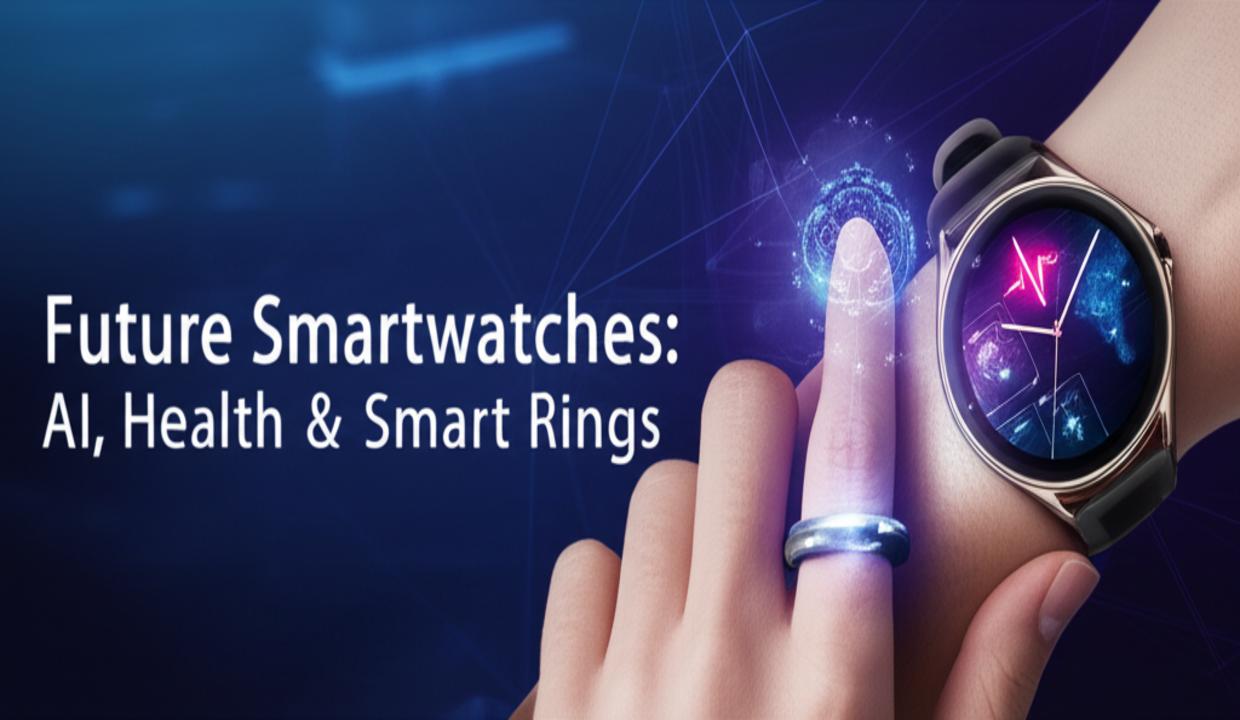
Welcome to the exciting world of wearable technology, where your wrist, or even your finger, holds the key to a healthier, more connected future. Smartwatches have come a long way from simple step counters; today, they are sophisticated devices brimming with cutting-edge technology. This article delves into the fascinating future of smartwatches, exploring how they are transforming from basic health trackers into powerful, AI-powered assistants that seamlessly integrate into our daily lives. Get ready to discover the innovations reshaping smart device evolution, from advanced health monitoring to the intelligence of AI smartwatches.
Main Highlights: The Future of Smartwatches: From Health Tracking to AI-Powered Assistants
The landscape of wearable technology is undergoing a rapid transformation. The future of smartwatches is undeniably centered around hyper-personalized health and an unprecedented level of intelligent assistance. Imagine a device that not only tracks your heart rate but also offers bespoke advice on stress management or even predicts potential health issues before you feel a single symptom. This isn’t science fiction; it’s the reality emerging in 2025 and beyond, driven by powerful generative AI and innovative new form factors.
Key advancements include:
- Generative AI integration, turning devices into holistic health and wellness coaches.
- Advanced health scoring and personalized recommendations for optimal well-being.
- Conversational AI assistants that interpret complex health data for actionable insights.
- The ability for early detection of health issues, often pre-symptom.
- New form factors, such as multi-sensor smart rings, offering extended battery life and discreet monitoring.
Unveiling the Power: How Smartwatches Work
At their core, smartwatches are sophisticated data collection hubs. These miniature marvels house an array of advanced sensors designed to meticulously gather information from your body. We’re talking about precise ECG capabilities, accurate blood oxygen saturation measurements, continuous heart rate tracking, detailed sleep stage analysis, nuanced motion detection, and even skin temperature monitoring.
The true magic happens once this data is collected. Powerful AI and machine learning (ML) algorithms spring into action, analyzing vast quantities of information in real time. This intelligent processing is what transforms raw data into meaningful health insights, personalized recommendations, and proactive health alerts, making them truly intelligent companions. These algorithms are constantly learning and adapting to your unique physiological patterns.
The evolution from simple data display to interpretive intelligence is the hallmark of modern AI smartwatches. They don’t just show you numbers; they help you understand what those numbers mean for your personal health journey. This real-time analysis is crucial for both daily wellness management and the early identification of potential concerns, bridging the gap between passive tracking and active health intervention.
Beyond the Wrist: Evolving Smartwatch Design and Form Factors
While the classic wristwatch remains a popular choice, the future of wearable tech is embracing diverse designs for enhanced comfort and functionality. The market is seeing an exciting diversification of form factors beyond just the traditional smartwatch. This expansion caters to a wider range of user preferences and specific use cases.
A prime example of this innovation is the emergence of smart rings, such as the much-anticipated Samsung Galaxy Ring. These discreet devices pack multiple advanced sensors into a compact, elegant design. They offer an unobtrusive way to monitor health data continuously, often boasting impressive battery life of up to 7 days. This means prolonged usage without the constant worry of frequent charging, enhancing user convenience significantly.
The drive behind these new designs isn’t just aesthetics; it’s about optimizing data collection and user experience. Rings, for instance, can offer different sensor contact points than wrists, potentially enhancing the accuracy of certain measurements. This ongoing evolution in design ensures that wearable technology becomes more seamlessly integrated into our lives, moving beyond a gadget to a truly personal and discreet health companion. Find out more about these trends in this informative article: 2025’s Top Smartwatches and Fitness Trackers.
The Brains Behind the Brawn: AI, Data, and Security
The true power of modern smartwatches lies in their advanced artificial intelligence capabilities. These devices are no longer just passive sensors; they are active participants in your health journey, driven by sophisticated AI and ML algorithms. This intelligence is responsible for everything from interpreting complex sleep patterns to providing contextual assistance throughout your day. For instance, brands like Samsung Galaxy AI and Google Fitbit AI are leading the charge in developing highly intuitive and responsive virtual assistants.
Beyond health, smartwatches are becoming central to our digital lives, facilitating seamless interactions and transactions. Many new models offer advanced e-commerce integrations, allowing users to make purchases and even track deliveries directly from their wrist. This convenience is coupled with robust security measures, primarily relying on highly secure biometric authentication, such as fingerprint or heart rate recognition, to protect your personal and financial data. This ensures that while convenience increases, security remains paramount.
However, with great power comes great responsibility. The immense amount of personal health data collected by these devices raises critical questions about privacy and security. Manufacturers are continually working to enhance encryption and data protection protocols. Ensuring the medical reliability of AI recommendations is another significant challenge, as these systems must be incredibly accurate to provide trustworthy health advice. Balancing innovation with stringent data privacy and medical accuracy standards is crucial for the future adoption and trust in these smart devices.
2025’s Game-Changers: Generative AI and Smart Rings
The year 2025 marks a pivotal moment in the evolution of smartwatches and wearable technology. The most significant breakthrough is undoubtedly the widespread integration of generative AI. This advanced form of artificial intelligence is fundamentally transforming smartwatches from mere data trackers into proactive, intelligent health and wellness coaches. It moves beyond simply reporting data, providing deep, actionable insights.
Imagine a watch that doesn’t just tell you you’re stressed but proactively suggests personalized breathing exercises based on your current physiological state. This is the promise of generative AI. It enables features like comprehensive health scoring and truly personalized health and wellness advice tailored to your unique lifestyle and goals. Furthermore, conversational AI assistants are becoming incredibly adept at interpreting complex data related to your sleep, stress levels, activity, and fitness, offering guidance in a natural, intuitive way.
Parallel to AI advancements, new form factors are gaining considerable traction. The introduction of smart rings, such as the innovative Samsung Galaxy Ring, exemplifies this trend. These rings are not just fashion statements; they are powerful miniature computers, packed with multiple sensors, and boasting impressive battery life. This design innovation expands the reach of wearable technology, offering users more choice and discreet ways to monitor their health continuously. Learn more about how AI is shaping wearables in 2025 here: AI in Wearables: What We Expect in 2025.
Real-World Applications: Transforming Daily Life
The advancements in future smartwatches are translating into tangible benefits that enhance our daily lives across multiple domains. In health, continuous monitoring is paramount. Users can now keep a constant watch on vital metrics such as heart rhythm, blood oxygen levels, stress, sleep quality, and even subtle temperature fluctuations. This detailed oversight is invaluable for proactive health management and understanding one’s body better.
For fitness enthusiasts, smartwatches offer highly personalized coaching. With AI-optimized workout tracking, your device can suggest the best exercises, monitor your form, and provide recovery suggestions tailored to your performance and body’s needs. This goes far beyond generic workout plans, offering a truly adaptive fitness journey. The blend of real-time data and intelligent algorithms makes every workout more effective.
Beyond health and fitness, AI-powered voice assistants make hands-free control a reality, from setting reminders to managing schedules and receiving contextual assistance throughout the day. Need to quickly check your calendar or get directions while your hands are full? Your smartwatch assistant is ready. Furthermore, evolving form factors and significantly improved battery efficiency mean prolonged usage without frequent charging, offering greater convenience and an uninterrupted experience. This ensures your smart device is always ready when you are.
The Horizon Ahead: Potential and Present Limitations
The journey of wearable tech is far from over, with immense potential still to be unlocked. Future models are poised to push the boundaries of what’s possible, promising even more sophisticated features. We anticipate further improvements in AI capabilities, leading to more nuanced health insights and even more responsive virtual assistance. Sensor accuracy is also expected to reach new heights, making health data even more reliable and medically viable.
One of the most exciting prospects is the expansion into truly medical-grade health monitoring. Imagine your smartwatch being able to detect serious conditions with the same accuracy as clinical devices, providing early warnings that could be life-saving. Battery life, a perennial challenge for all smart devices, is also a key area of focus for improvement. Longer-lasting batteries will enable more continuous monitoring and reduce user friction.
| Future Potential | Current Limitations |
|---|---|
| Further enhanced AI and ML capabilities for deeper insights. | Ongoing challenges with battery longevity requiring frequent charges. |
| Improved sensor accuracy leading to medical-grade health monitoring. | Significant privacy and security concerns regarding sensitive health data. |
| Expanded virtual assistance functionality for comprehensive daily support. | Ensuring the medical reliability of AI recommendations remains a hurdle. |
| Wider adoption of diverse form factors (rings, hearables) for versatility. | Overcoming size and power constraints for smaller, more advanced wearables. |
| Seamless integration with broader health ecosystems for holistic care. | High cost of cutting-edge models can be a barrier to entry for many. |
Navigating the Ecosystem: Key Players and Emerging Trends
The competitive landscape of smartwatch health tracking is vibrant, with key players constantly innovating. Brands like Apple Watch continue to set benchmarks with their robust health features and seamless ecosystem integration. Samsung Galaxy Watch and the new Galaxy Ring are pushing the envelope with advanced AI and diverse form factors, appealing to a broad user base. Google Fitbit AI is also a significant player, focusing on personalized wellness coaching and comprehensive health insights.
Beyond these giants, several emerging trends are shaping the future of wearables. The move towards more specialized sensors, such as continuous glucose monitoring without invasive procedures, is on the horizon. Furthermore, the integration of these devices into broader digital health platforms is creating a holistic view of personal well-being. This interconnectedness allows for better data sharing with healthcare providers, assuming appropriate privacy protocols are in place. These innovations highlight the relentless pursuit of more intelligent, proactive, and integrated health solutions. Read more about the five key trends shaping wearables in 2025: Five Key Trends in Wearables 2025.
Expert Insights on the Wearable Revolution
Industry experts agree that the trajectory of smart device evolution points firmly towards greater intelligence and medical utility. According to a recent article, “What to Expect from Smartwatches in 2024: More AI, New Health Features, and More,” the focus remains on advancing AI capabilities and expanding health monitoring. This reflects a consensus that the primary value proposition of future smartwatches will be their ability to provide increasingly sophisticated and proactive health management.
The shift towards generative AI is particularly exciting for analysts. It signifies a move beyond simple data logging to true intelligent companionship. This means devices that don’t just record what happened but help you understand why and what to do next. The emphasis on personalized coaching and early detection of potential health issues is transforming how individuals engage with their own well-being. This powerful combination of advanced hardware and intelligent software is laying the groundwork for a future where personal health management is truly in the palm of your hand, or on your finger. Explore more about the future of wearable technology here: The Future of Wearable Technology.
FAQ
- What are AI smartwatches?
AI smartwatches are wearable devices that use advanced artificial intelligence and machine learning algorithms to analyze sensor data, provide personalized health insights, offer intelligent recommendations, and act as virtual assistants. They go beyond basic tracking to interpret complex patterns and offer proactive guidance, making them smarter health and wellness companions. - How will smartwatches track health in the future?
Future smartwatches will continue to enhance health tracking through more accurate sensors (e.g., advanced ECG, blood oxygen, temperature, sleep stages) and sophisticated AI. They will offer continuous, real-time monitoring, personalized health scoring, early detection of potential health issues, and AI-driven coaching for fitness and wellness, moving towards medical-grade capabilities. - What new form factors are emerging in wearable tech?
Beyond traditional wristwatches, new form factors like smart rings (e.g., Samsung Galaxy Ring) are gaining popularity. These discreet devices pack multiple sensors into a compact design, offering comfortable, continuous monitoring with extended battery life. Other potential forms include hearables with integrated health tracking. - What are the benefits of generative AI in smartwatches?
Generative AI in smartwatches enables highly personalized health and wellness advice, advanced health scoring, and conversational AI assistants that interpret complex data. It transforms devices into holistic coaches, capable of offering bespoke recommendations, understanding user context, and potentially predicting health issues before symptoms appear. - Are there any limitations to future smartwatches?
Despite rapid advancements, challenges remain. Battery longevity is an ongoing concern, as continuous monitoring demands significant power. Privacy and security of sensitive health data are critical issues. Additionally, ensuring the medical reliability and regulatory approval of AI-driven health recommendations is a significant hurdle.
Conclusion
The future of smartwatches is undeniably intelligent, integrated, and incredibly personal. We’ve journeyed through a landscape where smartwatch health tracking is becoming profoundly accurate and prescriptive, powered by the marvels of AI smartwatches. From continuous monitoring of vital signs to personalized fitness coaching and proactive health alerts, these devices are setting new standards for personal well-being. The evolution in design, exemplified by innovative smart rings, ensures that wearable technology is more discreet, comfortable, and seamlessly integrated into our lives than ever before. As smart device evolution continues, we can anticipate even greater accuracy, longer battery life, and truly medical-grade capabilities, transforming how we understand and manage our health.
The promise of AI-powered assistants that anticipate our needs and offer tailored guidance is already here, and it’s only set to grow. So, whether you’re looking to optimize your fitness, manage a chronic condition, or simply live a more connected life, the future of smartwatches offers an exciting glimpse into what’s possible. Embrace the change, engage with the technology, and discover a healthier, smarter you. Share your thoughts on what you’re most excited about in the comments below! Don’t forget to explore our About Us page to learn more about our mission, or Contact us with any questions. #FutureWearables
Watch More in This Video
Disclaimer: All images and videos are sourced from public platforms like Google and YouTube. If any content belongs to you and you want credit or removal, please inform us via our contact page.