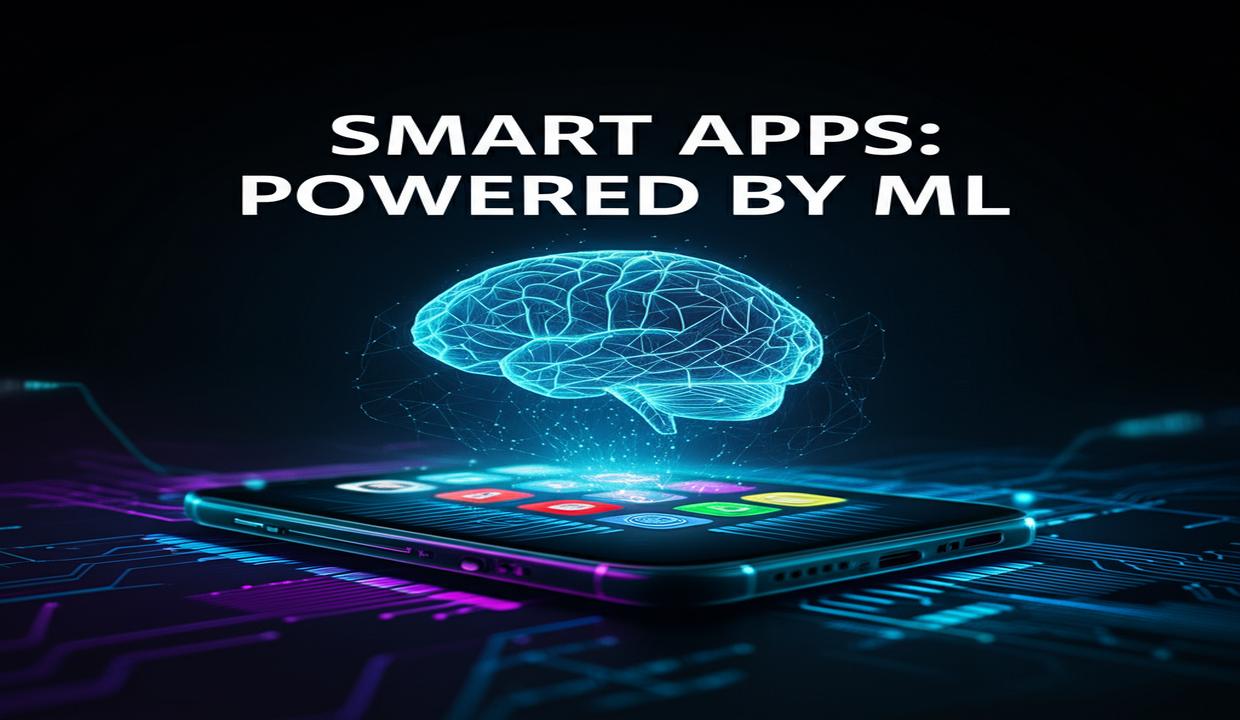
The digital landscape of 2025 is undeniably shaped by an invisible yet immensely powerful force: Machine Learning algorithms. These sophisticated computational engines are not just enhancing applications; they are fundamentally redefining what a “smart app” can be. From the moment you unlock your device to the deep dives into your favorite services, Machine Learning (ML) is the secret sauce that makes apps predictive, adaptive, and intensely personal. This isn’t just about minor tweaks; it’s a paradigm shift, enabling applications to anticipate our needs, learn from our behaviors, and deliver intelligent automation that was once confined to science fiction.
As we navigate through 2025, the proliferation of AI innovations embedded within our daily tools marks a new era. This article will explore the pivotal ways in which ML algorithms are powering the next generation of smart applications, transforming everything from personalized experiences to critical industry operations. We’ll delve into the specific techniques, real-world examples, and market trends that highlight the indispensable role of Machine Learning in the future of apps.
Main Highlights: How Machine Learning Algorithms Are Powering Smart Apps in 2025
In 2025, Machine Learning algorithms are at the heart of every truly smart application, offering unparalleled capabilities that elevate user interaction and operational efficiency. These algorithms are the brains behind the scenes, processing vast quantities of data to enable highly personalized experiences, predictive insights, and automated decision-making. The transformative impact of ML spans across every industry, making apps more intuitive, responsive, and ultimately, more valuable to their users. Understanding this impact is key to grasping the trajectory of digital innovation.
The essence of smart apps in this era lies in their ability to learn and adapt. Unlike traditional applications that follow static rules, ML-powered apps evolve with every interaction. This dynamic intelligence is what sets them apart, moving beyond mere functionality to offer a deeply engaging and anticipatory user journey. The sheer scale and complexity of data that these algorithms can process unlock possibilities that were unimaginable just a few years ago, fundamentally reshaping user expectations.
The Core of Intelligence: Personalization & Predictive Analytics
At the forefront of ML algorithms‘ impact on smart apps is their capacity for deep personalization and predictive analytics. Apps in 2025 don’t just respond to your commands; they learn your preferences, habits, and even your mood over time. This continuous learning process allows them to tailor experiences that feel uniquely designed for you, enhancing engagement and utility.
Consider the daily routines that ML now optimizes. For instance, Google Maps has evolved far beyond simple navigation. It uses sophisticated ML models to predict traffic patterns and suggest optimal routes based on a vast trove of historical and real-time data, significantly improving navigation efficiency. Similarly, music streaming giants like Spotify leverage complex algorithms to customize music recommendations and generate mood-based playlists, analyzing your listening behavior down to the subtle nuances. This level of personalized content delivery is a cornerstone of modern app design, ensuring that users always find something relevant and engaging. For more examples of top apps using this technology, you can refer to insights on popular apps utilizing Machine Learning.
These predictive capabilities extend beyond entertainment and navigation. They enable apps to anticipate your next move, offering relevant suggestions before you even articulate a need. This proactive approach not only saves time but also creates a seamless, almost intuitive interaction with technology, making apps feel less like tools and more like intelligent companions. The ability of ML algorithms to synthesize vast amounts of user data into actionable insights is truly what makes these experiences possible.
Driving Industry-Wide AI Innovations: AI-driven Automation
The reach of Machine Learning algorithms extends far beyond consumer personalization, instigating profound AI innovations and automation across critical industries in 2025. Healthcare and finance, in particular, are experiencing revolutionary transformations thanks to the integration of advanced ML models. These sectors, traditionally reliant on human expertise and manual processes, are now leveraging AI to enhance accuracy, efficiency, and accessibility on an unprecedented scale.
In healthcare, ML algorithms are becoming indispensable tools for early disease diagnosis. By analyzing complex medical images, patient records, and genetic data, these models can identify subtle patterns indicative of conditions like diabetic retinopathy even before symptoms become apparent. This early detection capability drastically improves patient outcomes and paves the way for truly personalized medicine and accelerated drug discovery processes. The ability to predict patient outcomes and tailor treatment plans based on individual biological profiles represents a monumental leap forward, fundamentally changing how medical professionals approach care. To understand how ML is changing everything, you can explore detailed information on Machine Learning’s foundational impact.
The financial sector is equally being reshaped by ML-driven automation. Algorithms are now adept at detecting fraudulent transactions in real-time, safeguarding billions of dollars annually for banks and consumers. Beyond security, ML models automate high-frequency trading strategies, optimizing investment portfolios and executing trades at speeds impossible for humans. Furthermore, they power personalized financial advice, offering tailored recommendations on savings, investments, and loans based on individual financial behavior and market conditions. These applications not only streamline operations but also democratize access to sophisticated financial tools, making advanced financial planning more accessible to a wider audience.
Beneath the Surface: Advanced ML Algorithms Making Apps Smarter
The extraordinary capabilities of smart apps in 2025 are underpinned by continuous advancements in ML algorithms. Three categories, in particular, stand out for their transformative impact: Transformer models, Graph Neural Networks (GNNs), and Reinforcement Learning. These cutting-edge techniques are pushing the boundaries of what applications can achieve, enabling more complex understanding, sophisticated recommendations, and dynamic decision-making.
Transformer models, exemplified by architectures like GPT-4 and BERT, have become the undisputed champions in natural language processing (NLP) and are rapidly gaining ground in image recognition. These models are the backbone of highly intelligent chatbots, advanced document analysis tools, and creative content generation platforms. Their ability to understand context and generate human-like text has revolutionized how users interact with apps, making conversations feel more natural and intelligent. In image recognition, transformers are powering apps that can accurately identify objects, faces, and even generate descriptive captions, opening up new avenues for accessibility and content creation.
Graph Neural Networks (GNNs) excel at modeling and interpreting complex relationships within data. This makes them incredibly powerful for applications requiring an understanding of intricate connections, such as recommender systems in e-commerce apps. GNNs can analyze how users interact with products, other users, and categories to provide highly accurate and novel suggestions, significantly boosting user engagement and sales. Beyond e-commerce, they are proving invaluable in molecular property prediction for drug discovery and for analyzing social network structures, enabling more nuanced insights into human connections. For an in-depth look at these and other key algorithms, refer to this guide on top Machine Learning algorithms for 2025.
Reinforcement learning (RL) algorithms specialize in optimizing decision-making in real-time, dynamic environments. By learning through trial and error, RL models can figure out the best sequence of actions to achieve a goal. This is crucial for applications like autonomous vehicle navigation, where decisions must be made instantly based on constantly changing road conditions. Similarly, in e-commerce, RL is used for dynamic pricing strategies, adjusting product prices in real-time based on demand, inventory levels, and competitor actions to maximize revenue. The ability of RL to adapt and learn from continuous feedback makes it a cornerstone for adaptive automation in smart apps across various complex scenarios.
Crafting Seamless Interactions: Enhanced User Experience
The ultimate goal of integrating ML algorithms into smart apps is to deliver an unparalleled user experience. In 2025, apps are not just functional; they are intuitive, responsive, and proactively helpful. This dramatic enhancement in user interaction is a direct result of ML’s ability to anticipate needs and personalize communication, leading to significantly improved user retention and satisfaction. The impact of AI and ML on mobile app development is truly transformative, as highlighted by expert analyses.
Imagine typing a message and having your app intelligently suggest the next few words, saving you time and effort. This is predictive text powered by sophisticated ML models that learn your writing style and common phrases. Similarly, voice assistants, embedded in everything from smartphones to smart home devices, are becoming increasingly natural and capable. ML enables them to understand complex queries, process different accents, and even discern emotional nuances, making voice interaction a truly seamless part of the app experience.
Personalized notifications are another powerful example of enhanced UX. Instead of generic alerts, ML ensures that you receive timely and relevant information tailored to your specific interests and context. Whether it’s a reminder for an upcoming event, a news update on a topic you follow, or a promotional offer for a product you might genuinely like, these notifications feel helpful rather than intrusive. This level of personalized engagement fosters a stronger connection between the user and the app, encouraging continued use and loyalty. The continuous refinement of these features ensures that apps don’t just perform tasks, but truly augment our daily lives, making them feel indispensable.
The Growth Engine: Market Momentum and Developer Focus
The profound impact of Machine Learning algorithms on smart apps is vividly reflected in the booming market. Projections indicate that the global machine learning market is set to reach an astounding $210 billion in 2025, underscoring its central and undeniable role in the evolution of app development. This massive market growth is a clear indicator that ML is not merely a trend, but a fundamental shift driving the next generation of digital products and services. Businesses and consumers alike are recognizing the immense value that intelligent applications bring to the table.
For app developers, this surging market presents both immense opportunities and significant challenges. Integrating sophisticated ML capabilities into applications is no longer an optional extra; it’s a competitive necessity for building truly smart and relevant products. Developers are increasingly advised to thoughtfully embed ML throughout their app architectures, focusing on use cases that genuinely enhance user experience and deliver tangible value. This often involves moving beyond basic data analytics to harness advanced predictive and prescriptive capabilities that differentiate their offerings.
Recognizing the complexity of building and deploying advanced ML models, many developers and companies are opting to partner with specialized software companies. These collaborations provide access to deep expertise, pre-trained models, and scalable infrastructure, allowing app developers to focus on their core product while leveraging the best in AI innovation. This strategic approach ensures that even smaller teams can integrate powerful ML algorithms without needing to build an entire data science division from scratch. For developers seeking guidance, a comprehensive guide on Machine Learning for developers in 2025 can offer valuable insights.
This developer-centric focus, coupled with robust market growth, solidifies ML’s position as the key enabler for the future of apps. It’s an exciting time where technical innovation meets practical application, creating an ecosystem of increasingly intelligent and adaptive digital tools that enrich our everyday lives. The emphasis on smart integration is creating a virtuous cycle, driving further advancements in AI and its applications.
Real-World Triumphs: Smart Apps in Action Today
The theoretical power of ML algorithms truly comes to life through their real-world applications in smart apps across diverse sectors. In 2025, these instances are not isolated experiments but integral components of everyday life and critical industry operations. They demonstrate the tangible benefits of embedding intelligence into digital tools, making them more effective, efficient, and user-centric.
One of the most impactful applications is seen in healthcare, where AI systems are actively identifying severe conditions like diabetic retinopathy. These systems analyze retinal scans with remarkable accuracy, often detecting the disease before any physical symptoms manifest. This early warning enables timely intervention, potentially saving eyesight and significantly improving patient quality of life. Such innovations highlight the life-changing potential of ML in medical diagnostics.
In the realm of logistics and commerce, supply chain platforms are leveraging reinforcement learning to achieve unprecedented levels of optimization. These platforms continually learn from real-time data regarding demand fluctuations, shipping costs, and inventory levels. They then make autonomous decisions to adjust inventory, route shipments, and manage warehousing, ensuring maximum efficiency and minimal waste. This dynamic, self-optimizing capability is a game-changer for businesses grappling with complex global supply chains.
Closer to home, popular consumer apps that we interact with daily are prime examples of ML in action. Instagram uses ML to curate your feed, showing you content from accounts and topics you’re most likely to engage with. Netflix and Amazon rely heavily on sophisticated recommendation engines, powered by ML, to suggest movies, TV shows, and products, leading to higher user satisfaction and sales. Uber employs ML to optimize ride matching, dynamic pricing, and estimated arrival times, making ride-sharing services incredibly efficient and convenient. These widespread applications underscore that AI innovations are not futuristic concepts but present-day realities, deeply integrated into the fabric of our digital existence.
Why ML Algorithms Are Indispensable for 2025 Apps
As we look at the landscape of 2025, it’s clear that Machine Learning algorithms are not just a feature but the foundational pillar for any truly successful smart app. Their ability to infuse deep personalization, generate predictive insights, and enable adaptive automation sets a new standard for application development. The era of static, rule-based apps is rapidly receding, replaced by dynamic, intelligent systems that learn and evolve with their users and their environments. This shift is not just about technological advancement; it’s about creating more meaningful and impactful digital experiences.
The power of cutting-edge models like transformers, GNNs, and reinforcement learning techniques ensures that applications can tackle increasingly complex challenges. From understanding human language nuances to navigating intricate network relationships and making optimal real-time decisions, these algorithms empower apps to perform tasks with an unprecedented level of intelligence. This continuous evolution of ML techniques guarantees that the capabilities of smart apps will only grow more sophisticated, further blurring the lines between human and artificial intelligence.
Ultimately, these capabilities are not just enhancing individual apps; they are actively reshaping entire industries, from healthcare and finance to retail and transportation. They are redefining user engagement, making interactions more intuitive, efficient, and personalized than ever before. The commitment to integrating powerful ML algorithms is not just an investment in technology; it’s an investment in the future of apps, driving the next wave of innovation that will continue to delight and empower users across the globe. #AIinApps
Pros and Cons of ML Integration in Apps
| Pros | Cons |
|---|---|
| Superior User Experience through deep personalization | Significant data privacy and security concerns |
| Increased Operational Efficiency and automation | High development complexity and specialized skill requirements |
| Unlocks New Capabilities (e.g., predictive analytics, advanced automation) | Substantial computational cost and resource demands |
| Enhanced User Retention due to tailored content and interactions | Potential for algorithmic bias and ethical dilemmas |
| Competitive Advantage in a rapidly evolving market | Dependency on vast amounts of quality data |
FAQ
- What defines a “smart app” in 2025?
In 2025, a smart app is defined by its ability to leverage Machine Learning algorithms to provide highly personalized, predictive, and adaptive user experiences. It learns from user behavior, anticipates needs, and automates tasks intelligently, making it more intuitive and effective than traditional applications. - How do ML algorithms enhance personalization in apps?
ML algorithms analyze user data, including preferences and habits, over time. This allows apps like Spotify or Netflix to offer tailored recommendations, custom content, and relevant notifications, creating an experience that feels uniquely designed for each individual user. - What advanced ML algorithms are prominent in 2025 smart apps?
Three key advanced ML algorithms dominating in 2025 include Transformer models (e.g., GPT-4 for NLP), Graph Neural Networks (for recommender systems and complex relationships), and Reinforcement Learning (for real-time decision-making in autonomous systems and dynamic pricing). - How is AI automation impacting industries like healthcare and finance?
In healthcare, AI innovations power early disease diagnosis by analyzing medical images and predicting outcomes. In finance, ML algorithms detect fraud, automate trading, and personalize financial advice, leading to enhanced efficiency, accuracy, and accessibility across both sectors. - What are the main benefits for developers integrating ML into apps?
Developers benefit from integrating ML by creating more intuitive and responsive applications, leading to improved user retention. It provides a competitive edge, unlocks new capabilities like predictive analytics, and drives market growth in the rapidly expanding Machine Learning sector.
Conclusion
In summation, the year 2025 stands as a landmark for smart apps, with Machine Learning algorithms serving as the indispensable engine driving their intelligence and efficacy. From crafting deeply personalized user experiences and offering predictive insights to enabling adaptive automation across critical industries like healthcare and finance, ML’s influence is pervasive and transformative. The sophistication of cutting-edge models, including transformers, Graph Neural Networks, and reinforcement learning, empowers applications to understand, anticipate, and respond to user needs with unparalleled precision.
The global machine learning market’s projected growth to $210 billion in 2025 vividly illustrates the pivotal role these algorithms play in the future of apps. As developers continue to integrate ML thoughtfully, often through strategic partnerships, we can expect an ongoing evolution of digital tools that are not only more powerful but also profoundly more intuitive and helpful. This era of AI innovations is fundamentally reshaping our interaction with technology, making our digital lives smarter, more efficient, and truly personalized. We encourage you to explore our About Us page to learn more about our mission, and feel free to Contact Us with any questions or comments.
Watch More in This Video
Disclaimer: All images and videos are sourced from public platforms like Google and YouTube. If any content belongs to you and you want credit or removal, please inform us via our contact page.