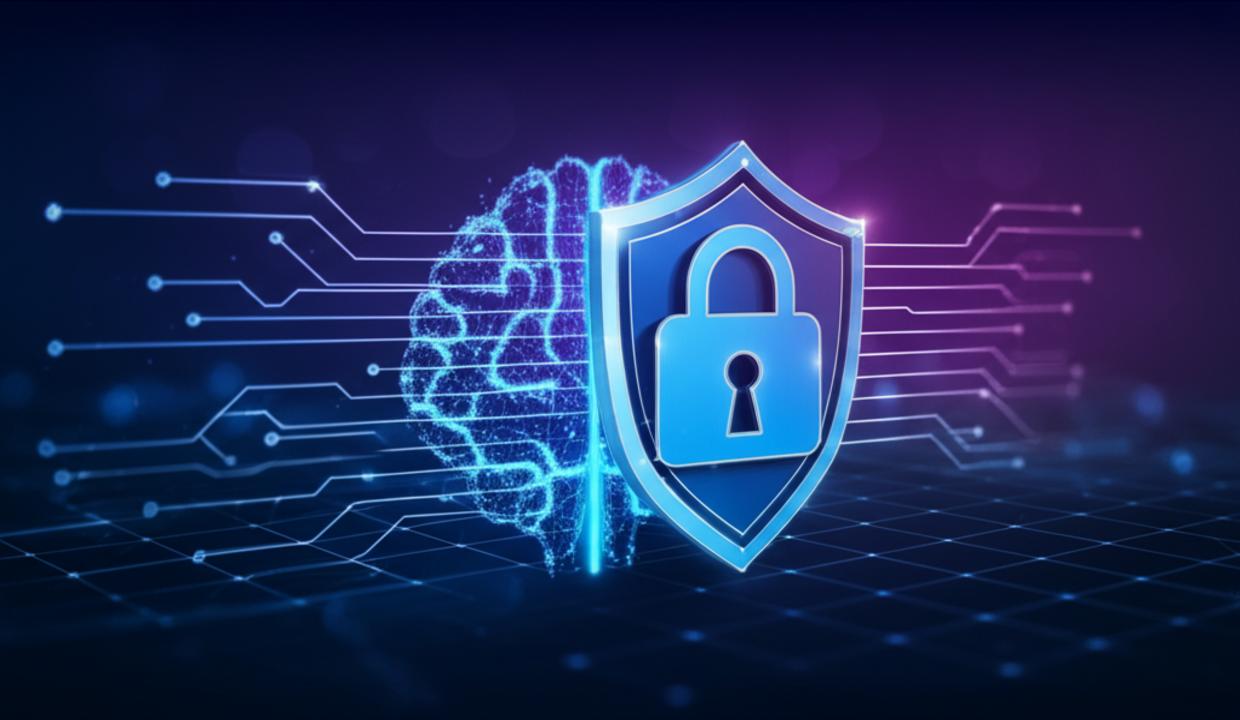
Welcome to “Secure Your Future: Mastering Data Privacy in the AI Era.” Today, we’re diving deep into a topic that affects us all: the future of data privacy in an AI-driven digital world. As artificial intelligence continues its rapid expansion, integrating into every facet of our lives, the way we perceive, manage, and protect our personal information is undergoing a profound transformation. This article will explore the escalating risks, groundbreaking solutions, and essential strategies for safeguarding digital privacy in an era defined by intelligent machines. Understanding this evolving landscape is not just for tech experts; it’s crucial for every individual and organization aiming to navigate the complexities of AI data protection and maintain trust in a connected world.
The Evolving Landscape of Data Privacy in the AI Era
The acceleration of AI adoption brings with it unprecedented challenges for data privacy AI. AI systems thrive on vast quantities of data, often personal, creating new vulnerabilities. This insatiable hunger for information means more data is collected, stored, and processed, significantly broadening the attack surface for malicious actors.
We are seeing an increase in sophisticated threats, from insider leaks and the misuse of “shadow AI” – unauthorized AI tools – to complex model-level attacks that can extract sensitive training data. Controlling how AI uses or deletes personal data becomes increasingly difficult. It is vital to remember that human error remains a critical factor in data exposure, often inadvertently creating gateways for breaches.
The scale and complexity of AI models exacerbate these risks. Traditional privacy safeguards are simply not enough to address the nuanced ways AI can infer, combine, and potentially expose sensitive information. Protecting personal data requires a fresh perspective and robust, AI-specific strategies. According to recent insights, the intersection of AI and privacy in 2025 demands proactive adaptation to these evolving challenges, focusing on comprehensive risk management strategies.
AI’s Dual Role: Enhancing Risks and Fortifying Defenses
Artificial intelligence presents a fascinating paradox for digital privacy. On one hand, AI fuels sophisticated threats, making it easier to generate convincing deepfakes or craft highly personalized phishing attacks. These AI-powered dangers can exploit individual vulnerabilities with alarming precision, eroding trust and compromising security.
However, AI is also emerging as a powerful ally in the fight for AI data protection. Advanced AI-driven tools are being developed to detect data breaches, monitor privacy compliance, and respond to incidents much faster than human teams ever could. These systems can classify sensitive data with remarkable accuracy, automate compliance reporting, and even track unauthorized data access in real-time. The ability of AI to analyze massive datasets quickly means it can identify anomalous behavior and potential threats before they escalate, providing a proactive defense mechanism against cyber risks.
For instance, AI can analyze network traffic for unusual patterns indicative of a breach or monitor user behavior for deviations from established privacy policies. This dual capability underscores the urgent need to understand and harness AI responsibly, leveraging its protective power while mitigating its inherent risks. Many organizations are actively exploring how AI applications can be used in privacy compliance to streamline operations and enhance security postures.
Navigating the New Regulatory Frontier
In response to the escalating privacy challenges posed by AI, regulatory bodies worldwide are accelerating their efforts to introduce and update legislation. Laws like the European Union’s EU AI Act, alongside established frameworks such as the GDPR (General Data Protection Regulation) and the CCPA (California Consumer Privacy Act), are evolving. These regulations increasingly mandate a “privacy-by-design” approach for AI systems, requiring privacy considerations to be embedded from the initial stages of development.
The focus is shifting towards greater transparency, accountability, and user control over personal data processed by AI. Organizations are now facing stricter requirements regarding how they collect, use, and share data with AI, with significantly heavier penalties for non-compliance. These regulations aim to ensure that individuals have a clearer understanding of how AI interacts with their personal information and that they possess the tools to exercise their rights effectively.
Staying abreast of these dynamic legal frameworks is critical for any organization utilizing AI. It’s not just about avoiding fines; it’s about building and maintaining consumer trust, which is invaluable in the AI-driven digital world. The evolving nature of these laws means that continuous monitoring and adaptation are essential for robust future data privacy strategies.
Pioneering Privacy-Preserving AI Technologies
A significant area of innovation in AI data protection involves the development and deployment of privacy-preserving techniques. These methods allow AI models to be trained and to function without directly exposing sensitive personal information. Two prominent examples are federated learning and differential privacy.
- Federated Learning: This technique enables AI models to be trained across multiple decentralized edge devices or servers holding local data samples, without exchanging the data itself. Only aggregated updates or model parameters are sent back to a central server, ensuring that personal data remains on the user’s device. This significantly reduces the risk of centralized data breaches.
- Differential Privacy: This method adds carefully calculated noise to datasets or query results before they are shared. This “noise” obscures individual data points, making it impossible to re-identify individuals while still allowing researchers to glean accurate statistical insights from the aggregated data. It provides a strong, quantifiable guarantee of privacy.
These advanced techniques are crucial for enabling AI functionality in sensitive sectors like healthcare and finance, where data sharing is highly restricted. By limiting the exposure of personal information, these technologies allow organizations to harness the power of AI while upholding stringent privacy standards. This approach is fundamental to securing data privacy AI for the long term.
Operationalizing Privacy: Automation and Human Expertise
The increasing volume of data subject requests (DSRs) – individuals asking to view, correct, or delete their data – presents significant operational challenges for organizations. Manually processing these requests, verifying identities, discovering relevant data across disparate systems, generating responses, and logging audits can be time-consuming, error-prone, and a major drain on resources.
Fortunately, automated systems are stepping in to streamline these processes. AI-powered tools can handle identity verification, efficiently discover all instances of an individual’s data within an organization’s ecosystem, assist in generating accurate responses, and maintain comprehensive audit logs. This automation dramatically improves accuracy, reduces response times, and enhances adherence to regulatory requirements like GDPR and CCPA. The ability of AI to automate these compliance tasks is a game-changer for digital privacy operations.
However, technology alone is not enough. Bridging the AI skills gap through workforce education and continuous training is paramount. Human expertise is essential for managing AI-specific privacy risks, ensuring ethical AI use, and establishing robust governance models, such as dedicated AI risk committees. This blend of smart automation and skilled human oversight is critical for effective AI data protection in the future.
For more detailed insights, exploring resources that delve into data privacy in 2025, navigating the evolving digital frontier offers valuable perspectives on these operational shifts.
Building Trust and Ethical AI Governance
As AI becomes deeply integrated into sensitive sectors like healthcare, finance, and retail, embedding privacy and ethical considerations throughout the entire AI lifecycle is no longer optional – it’s a strategic imperative. From the initial data collection and algorithm design to model deployment and ongoing use, every stage must be scrutinized for its ethical implications and potential privacy impacts. This holistic approach is crucial for maintaining public trust and ensuring continued compliance.
Public trust is the bedrock upon which the success of AI innovation rests. If individuals do not trust how their data is being used by AI, adoption will falter, and innovation will be stifled. Therefore, organizations must prioritize transparency, explainability, and fairness in their AI systems. This includes clearly communicating how data is used, providing mechanisms for recourse, and actively working to mitigate algorithmic bias.
Establishing robust governance frameworks, including dedicated AI risk committees and clear ethical guidelines, helps ensure that AI development and deployment align with societal values and legal requirements. This proactive commitment to ethical AI and strong digital privacy practices is fundamental for the future data privacy landscape.
The Path Forward: Balancing Innovation and Security
The future of data privacy in an AI-driven digital world demands a delicate balance between fostering innovation and ensuring robust security. Banning or overly restricting AI use within an organization often backfires, leading to “shadow IT” – employees using unauthorized, unsecured AI tools, thereby increasing overall risk indirectly. Instead, organizations must implement AI-specific governance and create secure environments, such as AI sandboxes, that allow for responsible experimentation and deployment.
These sandboxes provide isolated, controlled environments where AI models can be developed, tested, and validated for privacy and security before being integrated into live systems. This approach enables organizations to harness AI’s transformative potential while meticulously managing its risks. A proactive, multi-layered strategy that combines cutting-edge technology, clear policy frameworks, and human intelligence is essential for navigating the complexities of 2025 and beyond.
The journey towards mastering data privacy AI requires continuous adaptation, investment in new technologies, and a steadfast commitment to ethical principles. By embracing this challenge, organizations can build a future where AI innovations truly serve humanity without compromising fundamental privacy rights. Read more about key AI data privacy stats to understand the scope of the challenge.
Watch More in This Video
Delve deeper into the evolving world of AI and privacy with an insightful discussion on how AI both challenges and aids privacy, emphasizing AI governance, privacy-enhancing technologies, and crucial regulatory updates shaping this landscape in 2025.
(Note: Replace YOUR_VIDEO_ID with a relevant YouTube video ID if available. This placeholder aligns with the prompt’s instruction regarding a 2025 Stanford HAI or cybersecurity conference presentation on AI and privacy.)
FAQ
- How does AI impact individual digital privacy?
AI impacts privacy by consuming vast amounts of personal data for training, potentially leading to increased surveillance, data breaches, and the inference of sensitive information. However, it also offers tools for enhanced security and privacy protection.
- What are Privacy-Preserving Technologies (PPTs) in AI?
PPTs like federated learning and differential privacy are techniques that enable AI models to be trained and deployed without directly exposing individual sensitive data. They help maintain data utility while ensuring robust privacy guarantees.
- What role do regulations like the EU AI Act play in future data privacy?
Regulations such as the EU AI Act, GDPR, and CCPA are crucial for setting legal boundaries for AI use, mandating privacy-by-design, increasing transparency, and holding organizations accountable for AI data protection and ethical deployment.
- Why is workforce training important for AI data privacy?
Workforce training is vital to equip professionals with the skills to identify and mitigate AI-specific privacy risks, understand new regulations, and implement ethical AI practices. Human expertise complements automated tools for comprehensive protection.
- Can AI truly protect data privacy, or is it always a threat?
AI has a dual nature. While it introduces new threats, AI also powers sophisticated tools for detecting breaches, automating compliance, and enforcing privacy policies. The key lies in responsible development and deployment, leveraging AI for defense.
Conclusion
The journey towards mastering data privacy in an AI-driven digital world is complex but navigable. It demands a proactive, multi-layered approach that integrates advanced privacy-preserving AI technologies, embraces increasing regulatory rigor, leverages automated compliance tools, and fosters a critical need for human expertise and robust governance frameworks. As we move towards 2025 and beyond, our ability to safeguard personal information will define the success and ethical trajectory of AI innovation.
By understanding the dual nature of AI – its power to both threaten and protect – and by investing in both technological solutions and human education, we can ensure that AI serves as a force for good, respecting and protecting individual rights. Embrace the future of #DigitalPrivacy with confidence and control. For further exploration, don’t hesitate to check out our About Us page or Contact us with your questions.
Disclaimer: All images and videos are sourced from public platforms like Google and YouTube. If any content belongs to you and you want credit or removal, please inform us via our contact page.